


Agreement: I Agree Body: Dear Editor, Wildfires have ravaged several natural areas in France in early summer 2026, a period marked by heatwaves (1). In this context, and to prevent new fires from starting, some French local authorities have decided not to hold the traditional fireworks displays planned to celebrate Bastille Day (2). Whilst these last-minute decisions are highly commendable, policymakers should be encouraged to go further. Considering the severity of the climate crisis and the resulting increase in extreme weather events, there is no justification for continuing to emit carbon dioxide through recreational activities such as fireworks (3). These activities contribute to the problem and could even exacerbate it if they were to cause fires. They should definitely no longer take place anywhere in the country, and more environmentally friendly alternatives should be implemented to celebrate 14 July. Fireworks are noisy and release fine particulate matter into the atmosphere. They can also release microplastics into ecosystems (3). This is therefore both a public health issue and a planetary health issue. In the face of the climate crisis, we cannot simply react when disasters strike - such as the current wildfires - nor can we resign ourselves to desperately trying to adapt to extreme weather events and heatwaves. We must cut carbon dioxide emissions, and there is no simpler step to take than to start by giving up the non-essential activities that are easiest to give up. In France, as everywhere else in the world, policymakers should ban the use of fireworks, whether to celebrate a national event dating back more than two hundred years or for any other occasion. References : 1 Shepherd A. Continental heatwave: Fires blaze across Europe. BMJ 2026;394:e100214. doi: 10.1136/bmj-2026-100214. PMID: 42413974. 2 franceinfo. Les feux d'artifice du 14-Juillet annulés dans plusieurs départements à cause du risque d'incendies. 6 July 2026. https://www.franceinfo.fr/environnement/evenements-meteorologiques-extre... (Accessed July 11, 2026) 3 Faure N. The chaud must go on. Lancet 2022;400(10362):1512. doi: 10.1016/S0140-6736(22)01976-6. PMID: 36522206. No competing Interests: No competing interests The following competing Interests: NF was a member of the Alliance Santé Planétaire in 2022 and 2023. Electronic Publication Date: Sunday, July 12, 2026 - 10:53 AI use: No, I have not used AI Highwire Comment Subject: Continental heatwave: Fires blaze across Europe Workflow State: Released Full Title: Fireworks should be banned Highwire Comment Response to: Continental heatwave: Fires blaze across Europe Check this box if you would like your letter to appear anonymously:: Last Name: Faure First name and middle initial: Nicolas Email: faurenicolas@live.fr Address: 33110 Le Bouscat, France Occupation: General Practitioner BMJ: Additional Article Info: Rapid response
Rapid Response: Fireworks should be banned Dear Editor, Wildfires have ravaged several natural areas in France in early summer 2026, a period marked by heatwaves (1). In this context, and to prevent new fires from starting, some French local authorities have decided not to hold the traditional fireworks displays planned to celebrate Bastille Day (2). Whilst these last-minute decisions are highly commendable, policymakers should be encouraged to go further.
Considering the severity of the climate crisis and the resulting increase in extreme weather events, there is no justification for continuing to emit carbon dioxide through recreational activities such as fireworks (3). These activities contribute to the problem and could even exacerbate it if they were to cause fires. They should definitely no longer take place anywhere in the country, and more environmentally friendly alternatives should be implemented to celebrate 14 July.
Fireworks are noisy and release fine particulate matter into the atmosphere. They can also release microplastics into ecosystems (3). This is therefore both a public health issue and a planetary health issue.
In the face of the climate crisis, we cannot simply react when disasters strike - such as the current wildfires - nor can we resign ourselves to desperately trying to adapt to extreme weather events and heatwaves. We must cut carbon dioxide emissions, and there is no simpler step to take than to start by giving up the non-essential activities that are easiest to give up. In France, as everywhere else in the world, policymakers should ban the use of fireworks, whether to celebrate a national event dating back more than two hundred years or for any other occasion.
Source and reference
References : 1 Shepherd A. Continental heatwave: Fires blaze across Europe. BMJ 2026;394:e100214. doi: 10.1136/bmj-2026-100214. PMID: 42413974. 2 franceinfo. Les feux d'artifice du 14-Juillet annulés dans plusieurs départements à cause du risque d'incendies. 6 July 2026. https://www.franceinfo.fr/environnement/evenements-meteorologiques-extre... (Accessed July 11, 2026) 3 Faure N. The chaud must go on. Lancet 2022;400(10362):1512. doi: 10.1016/S0140-6736(22)01976-6. PMID: 36522206. Competing interests: NF was a member of the Alliance Santé Planétaire in 2022 and 2023. AI use: None declared
Read original source- Published
- Jul 12, 2026
- Updated
- Jul 12, 2026
- Source
- Bmj
- Category
- Environment
- Read time
- 2 min
Key facts
Why this matters locally
This environment story matters locally because it may affect readers, businesses, commuters, families, or public services in British Columbia.
Local impact
BC Post links this item to British Columbia coverage so readers can follow related city updates, weather, traffic, events, and category news in one place.
Timeline
Source and credit
BC Post may summarize, organize, and add local context for reader clarity. Original reporting remains with the listed publisher.
Related Articles
View all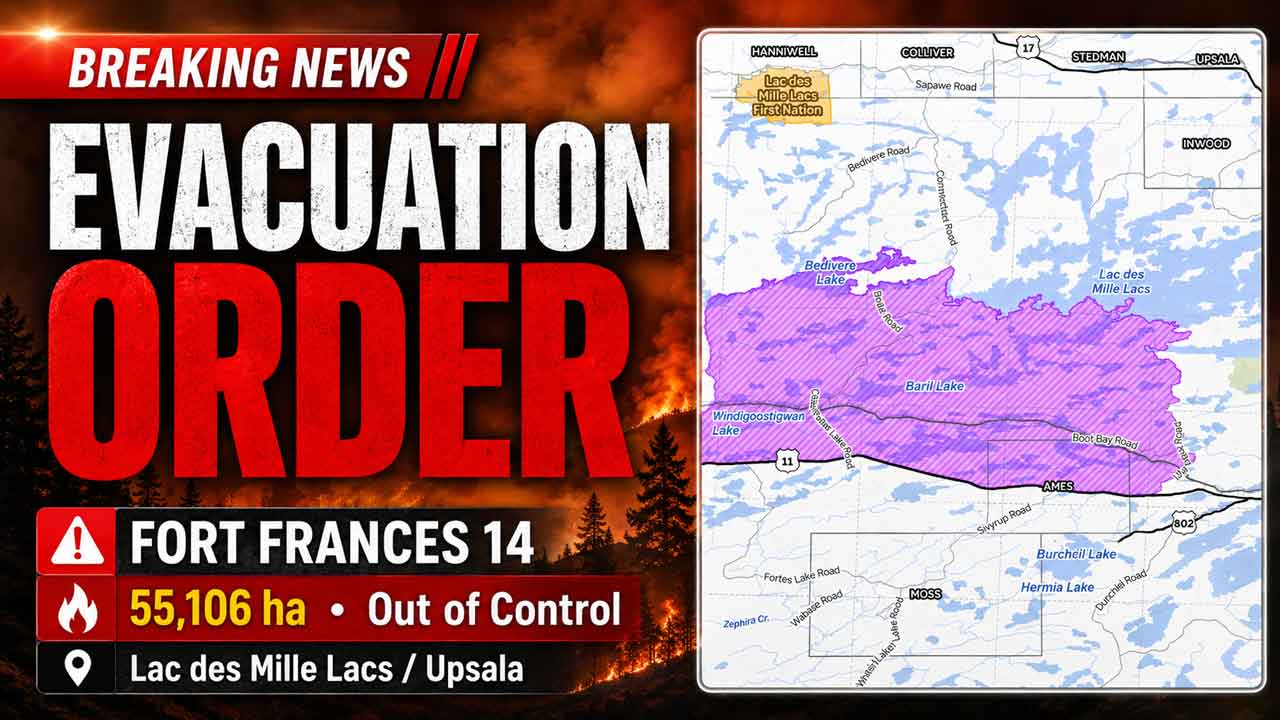 Environment
Updated Evacuation Information for Wildfire Fort Frances 14 (July 17 2026)
Environment
Updated Evacuation Information for Wildfire Fort Frances 14 (July 17 2026)
 Environment
50-hectare wildfire burns between Clearwater and 100 Mile House
Environment
50-hectare wildfire burns between Clearwater and 100 Mile House
 Environment
A powerful movement of healing arrives at Delta’s Discovery Centre
Environment
A powerful movement of healing arrives at Delta’s Discovery Centre
 Environment
Port Coquitlam mayor launches program that removes graffiti on public property within 48 hours
Environment
Port Coquitlam mayor launches program that removes graffiti on public property within 48 hours
 Environment
'Fending for ourselves' after Manitoba wildfire forces evacuation: O-Pipon-Na-Piwin leaders
Environment
'Fending for ourselves' after Manitoba wildfire forces evacuation: O-Pipon-Na-Piwin leaders
 Environment
2 wildfires north of Anahim Lake currently out-of-control
Environment
2 wildfires north of Anahim Lake currently out-of-control
More Local Coverage
Latest news Business
AI Market Trends: Q2 2026 Review and Forecast
Business
AI Market Trends: Q2 2026 Review and Forecast
 Politics
Powerful pro-life ad featuring boxing legend to air during final World Cup matches
Politics
Powerful pro-life ad featuring boxing legend to air during final World Cup matches
 Local News
Cowichan sports shorts: rugby, hockey, biking
Local News
Cowichan sports shorts: rugby, hockey, biking