

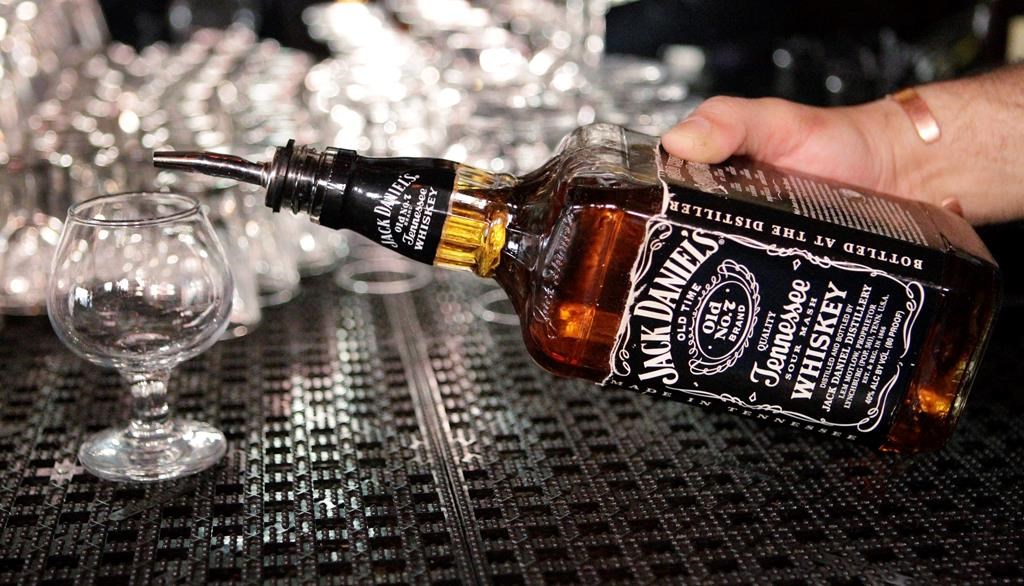
After yanking American booze off of Ontario liquor store shelves in response to U.S. President Donald Trump’s trade war, the province is coming up against expiry dates on some of the alcohol, along with rising storage costs. According to the Liquor Control Board of Ontario (LCBO), the cost to keep Kentucky bourbon and other U.S.-made [...]
Cost of storing banned U.S. booze in Ontario reaches $8 million Posted Jul 13, 2026 09:49:49 PM. After yanking American booze off of Ontario liquor store shelves in response to U.S. President Donald Trump’s trade war, the province is coming up against expiry dates on some of the alcohol, along with rising storage costs. According to the Liquor Control Board of Ontario (LCBO), the cost to keep Kentucky bourbon and other U.S.-made liquor products tucked away has reached $8 million – a number that is not lost on business experts who are keeping an eye on the bottom line.
“Every month that this carries on, we’re looking at a little bit less than $1 million a month,” Michael Armstrong, professor at Brock University’s Goodman School of Business told CityNews. “Which comes out of the LCBO’s profit margin, which ultimately comes out of the money that would have gone to the Provincial Treasury, which means it’s basically us taxpayers.” Meanwhile, some of the booze has gone bad.
Roughly $2.6 million worth of U.S. product that Ontario has been holding onto expired at the end of March 2026, which brings the total cost of the retaliatory trade strategy to more than $10 million. According to the LCBO, “the majority of product, roughly 97 per cent, remains in good condition and within its normal shelf-life.” “A significant portion of stored U.S. products are made up of wines and spirits which remain suitable for consumption, with spirit products safe to consume up to a decade,” it added.
The LCBO says it will continue to store U.S. products based on its standards and will continue to evaluate them, while working with the government on the best course of action. “We might as well sell the stuff we already have in inventory, rather than spending close to $1 million a month just to keep it there,” Armstrong added. “It would be good for the provincial treasury and therefore provincial taxpayers to sell it off right now.”
In a statement, Finance Minister Peter Bethlenfalvy’s office said “It’s the same as it has been throughout, until tariffs are removed the product will remain off the shelves.”
- Published
- Jul 13, 2026
- Updated
- Jul 13, 2026
- Source
- Citynews Ottawa
- Category
- Politics
- Read time
- 2 min
Key facts
Why this matters locally
This politics story matters locally because it may affect readers, businesses, commuters, families, or public services in British Columbia.
Local impact
BC Post links this item to British Columbia coverage so readers can follow related city updates, weather, traffic, events, and category news in one place.
Timeline
Source and credit
BC Post may summarize, organize, and add local context for reader clarity. Original reporting remains with the listed publisher.
Related Articles
View all Politics
Powerful pro-life ad featuring boxing legend to air during final World Cup matches
Politics
Powerful pro-life ad featuring boxing legend to air during final World Cup matches
 Politics
Vaughn Palmer: David Eby's slow and expensive step toward involuntary care
Politics
Vaughn Palmer: David Eby's slow and expensive step toward involuntary care
 Politics
Corus rebuts misinformation about future of Global News in Alberta after layoffs
Politics
Corus rebuts misinformation about future of Global News in Alberta after layoffs
 Politics
Pitt Meadows to host information session for city council candidates
Politics
Pitt Meadows to host information session for city council candidates
 Politics
Traditional Catholic response to Cupich’s suicide distortion
Politics
Traditional Catholic response to Cupich’s suicide distortion
 Politics
‘No consequences’: East Van woman says she was targeted by hate-motivated assault
Politics
‘No consequences’: East Van woman says she was targeted by hate-motivated assault
More Local Coverage
Latest news Business
AI Market Trends: Q2 2026 Review and Forecast
Business
AI Market Trends: Q2 2026 Review and Forecast
 Local News
Cowichan sports shorts: rugby, hockey, biking
Local News
Cowichan sports shorts: rugby, hockey, biking