

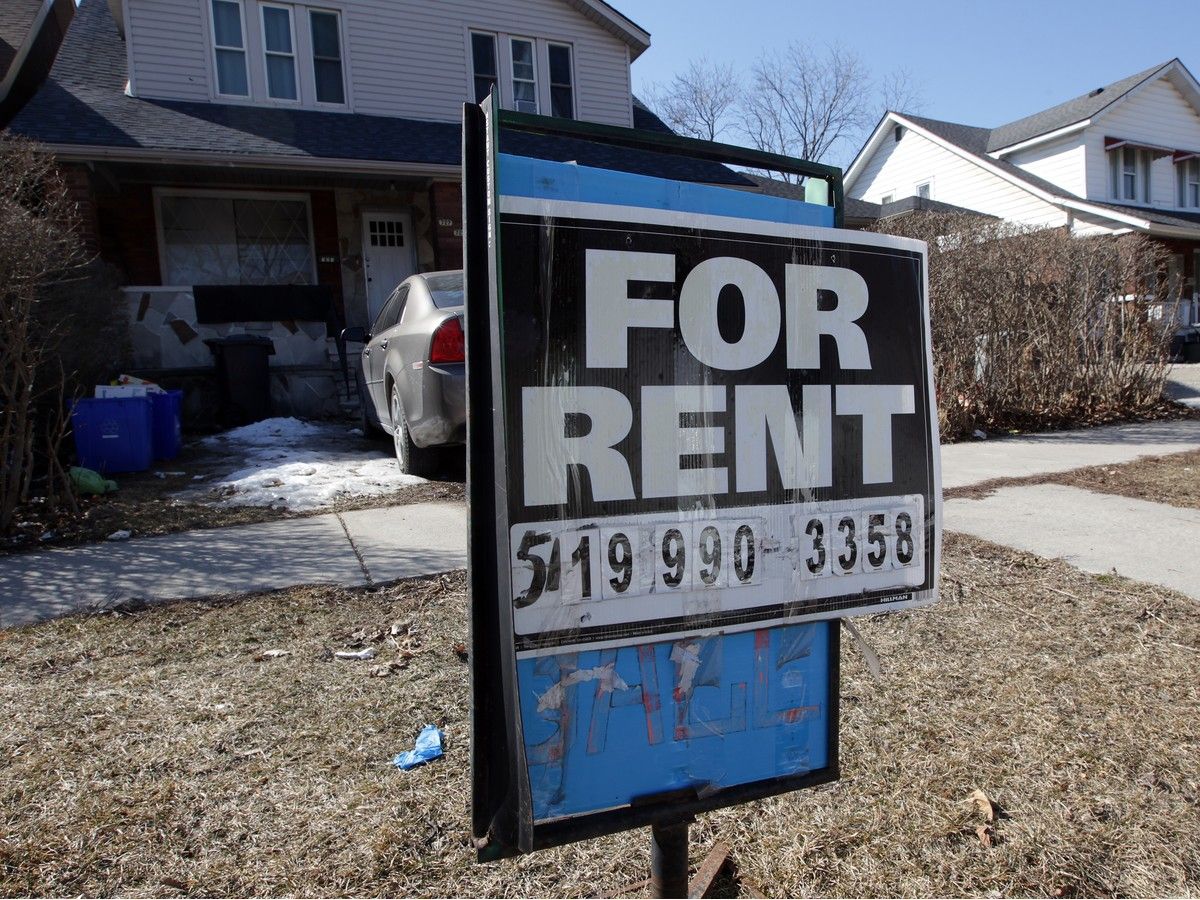
City launched a rental licensing pilot program in 2023 in Wards 1 and 2 to increase rental safety and bolster proactive property standards enforcement.
Windsor has abandoned a plan to make rental housing safer by forcing landlords to apply for licenses and submit to unit inspections. On Monday, city council decided not to expand the residential rental licensing program city-wide after learning it would require hiring 34 people and cost approximately $4.37 million annually in staffing alone. Instead, council voted to move forward with a public education program that will see two existing bylaw officers tell renters about their rights and perform proactive property standards enforcement.
Ward 2 Coun. Frazier Father, who represents the neighbourhood around the University of Windsor and its many student rentals, said he still supports some form of rental licensing regime but voted in favour of proactive enforcement. “I think this is a positive first step — and I emphasize ‘first step,'” Fathers said.
“People in neighbourhoods are waiting now to see action. “I want to emphasize to administration the need for speed on this, because there are folks waiting, and there are people at risk in the community.” Eventually, the city plans to create a registry of all Windsor rental properties, said Craig Robertson, manager of licensing and enforcement.
Staff are considering implementing a five-star rating system for those properties, so would-be tenants know what they might be getting themselves into before signing a lease. Windsor launched a rental licensing pilot program through a new bylaw in February 2023, requiring owners of rental properties around St. Clair College and the University of Windsor — Wards 1 and 2 — with four units or fewer to secure a license for each rented unit. The goal was to increase rental safety and bolster proactive property standards enforcement at a time when international students were sleeping on mattresses on the floors of rented windowless basements.
For rental licenses, the city charged landlords $466 per unit upfront and would have charged $275 for subsequent renewals, had the program persisted. The licensing also required landlords to get criminal records checks, confirm ownership, provide proof of insurance, and show that the unit meets legislated requirements, including building code, fire code, and electrical safety standards. A few months after the pilot began, a group of about 200 landlords launched a legal challenge to quash the bylaw.
The group’s lawyer argued the city enacted the rental licensing bylaw in bad faith, that the bylaw was arbitrary, and that it violated the Charter of Rights and Freedoms in a few ways, including by discriminating against businesses based on geography. While the issue wound through the legal system, the city agreed to pause rental licensing enforcement efforts but continued to accept applications, perform unit inspections, and hand out licences. Ultimately, the landlord group lost its legal battle, and was unsuccessful in appealing an Ontario Superior Court justice’s decision to dismiss the challenge.
“The pilot project was a hard fight, and it kind of breaks my heart to see it disappearing, not knowing that we’re going to have effective tools to address the concerns that we’ve had for years in this chamber,” said Ward 6 Coun. Jo-Anne Gignac. According to a staff report, the city receives between 12,000 and 14,000 complaints about yard and property maintenance each year.
Going forward, bylaw officers are expected to keep a list of confirmed and suspected rental properties. That list will contribute to an eventual rental registry. “We certainly don’t want to penalize good landlords that are out there providing safe living conditions with the red tape of a licensing program,” Robertson said.
During the rental licensing pilot in Wards 1 and 2, Robertson said bylaw officers found issues with “all kinds of houses,” including rental and owner-occupied properties. Officers will be able to target “problem areas” with repeat offenders. “We know there are a lot of issues that aren’t being reported.
“If we can have this boots-on-the-ground approach and proactively get into our neighbourhoods, we feel we can identify where those issues are,” he said. Robertson said other communities have tried to implement rental licensing, and it “doesn’t work.” Instead, it becomes “very cumbersome and expensive.”
Ward 1 Coun. Fred Francis, whose neighbourhood includes St. Clair College and student rentals, noted that city bylaw officers identified 1,033 private property violations during a 22-day blitz in 2025. “It’s clear as day that there’s an issue,” he said.
He called the decision to move forward with an education program and proactive enforcement “a responsible way forward.” Tenants can already file complaints about property standards to the city by contacting 311. However, an administrative review of complaint data compared with a 2025 enforcement blitz found that only 10 per cent of violations had been reported to the city — an “eye-opener” for staff, said city clerk Steve Vlachodimos.
Related Landlords lose court appeal against Windsor over rental licensing program An arbitrary line? Fate of Windsor's residential rental bylaw in judge's hands “People don’t like to report their neighbours,” he said. Property standards complaints cannot be submitted anonymously.
Each property complaint about property standards triggers an investigation by a city building inspector or bylaw officer. Investigations are normally performed within 30 days, though complaints involving serious health and safety issues are prioritized by building administration. On its website, the city encourages tenants to notify their landlords about any “deficiencies” in their unit before contacting the city.
The city plans to begin its proactive by property standards enforcement campaign with two dedicated bylaw officers in the spring of 2027. tcampbell@postmedia.com
- Published
- Jul 15, 2026
- Updated
- Jul 15, 2026
- Source
- Windsor Star
- Category
- Politics
- Read time
- 4 min
Key facts
Why this matters locally
This politics story matters locally because it may affect readers, businesses, commuters, families, or public services in British Columbia.
Local impact
BC Post links this item to British Columbia coverage so readers can follow related city updates, weather, traffic, events, and category news in one place.
Timeline
Source and credit
BC Post may summarize, organize, and add local context for reader clarity. Original reporting remains with the listed publisher.
Related Articles
View all Politics
Powerful pro-life ad featuring boxing legend to air during final World Cup matches
Politics
Powerful pro-life ad featuring boxing legend to air during final World Cup matches
 Politics
Vaughn Palmer: David Eby's slow and expensive step toward involuntary care
Politics
Vaughn Palmer: David Eby's slow and expensive step toward involuntary care
 Politics
Corus rebuts misinformation about future of Global News in Alberta after layoffs
Politics
Corus rebuts misinformation about future of Global News in Alberta after layoffs
 Politics
Pitt Meadows to host information session for city council candidates
Politics
Pitt Meadows to host information session for city council candidates
 Politics
Traditional Catholic response to Cupich’s suicide distortion
Politics
Traditional Catholic response to Cupich’s suicide distortion
 Politics
‘No consequences’: East Van woman says she was targeted by hate-motivated assault
Politics
‘No consequences’: East Van woman says she was targeted by hate-motivated assault
More Local Coverage
Latest news Business
AI Market Trends: Q2 2026 Review and Forecast
Business
AI Market Trends: Q2 2026 Review and Forecast
 Local News
Cowichan sports shorts: rugby, hockey, biking
Local News
Cowichan sports shorts: rugby, hockey, biking