

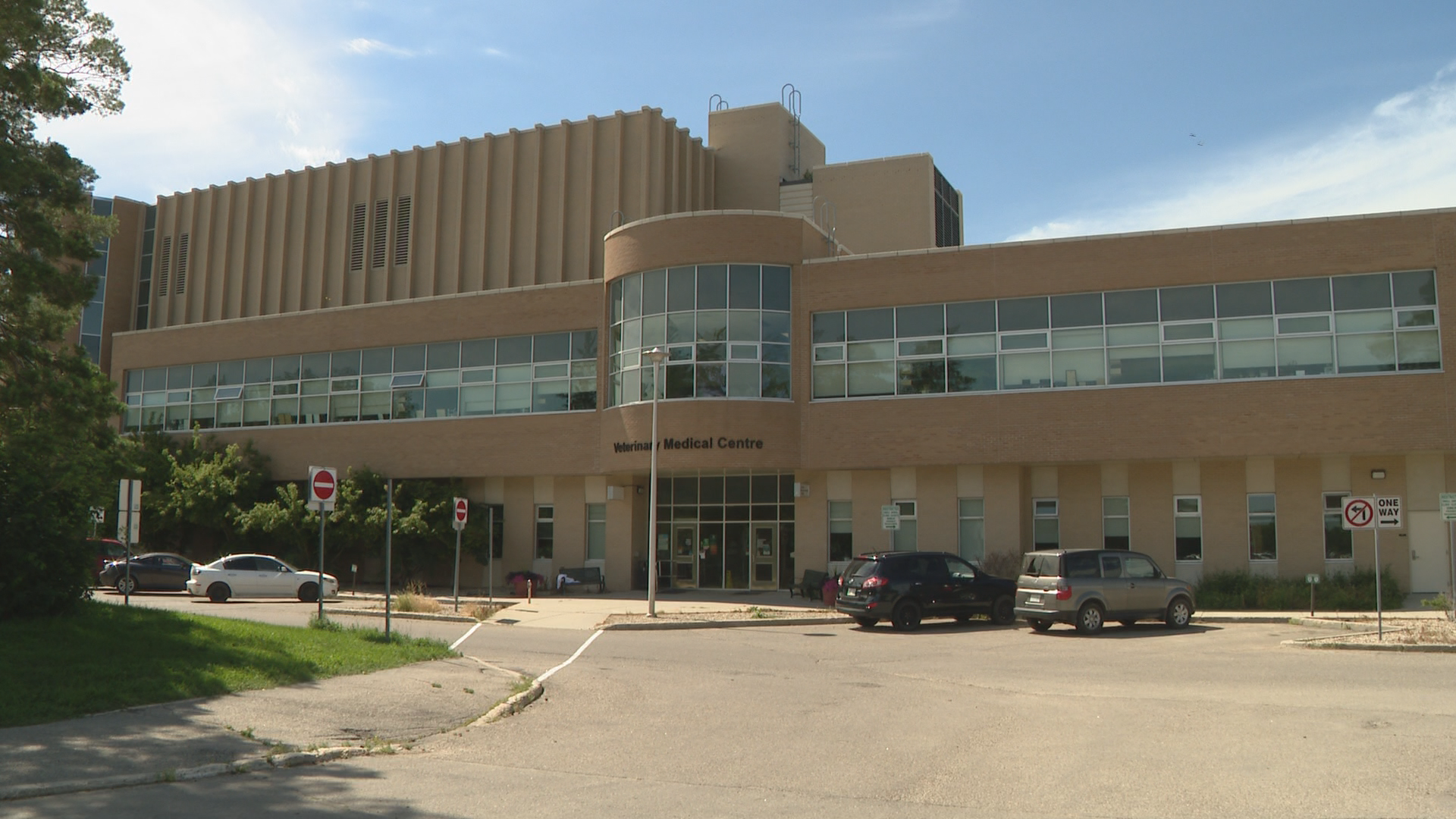
Wildlife advocates and students are raising concerns about the University of Saskatchewan veterinary college's decision to stop accepting wildlife at its clinic indefinitely.
The executive director of a Saskatoon-based rehabilitation centre says the University of Saskatchewan’s decision to indefinitely suspend its wildlife program will leave injured wild animals with fewer treatment options and will put added pressure on organizations already stretched thin. The Western College of Veterinary Medicine (WCVM) announced last week that it will stop accepting wildlife patients as of July 22, as it conducts a review of its services. “The school’s Veterinary Medical Centre (VMC) will complete this extensive review process before making a final decision about the future of its wildlife service,” the university told Global News in a statement.
“We had no inkling that this was going to happen,” said Jan Shadick, executive director of Living Sky Wildlife, adding that she was surprised by both the announcement and her rehabilitation centre being named by the university as an alternative care option. “We are sort of the equivalent of a walk-in clinic, and when you need a hospital, you need a hospital.” Shadick says her non-profit facility only rehabilitates animals, with services stopping short of providing medical care.
Any animals that require more complex medical care, such as surgeries and treatment for severe injuries, are referred to the VMC. Get breaking National news “It’s going to cause a lot of complications on our end because we won’t have anywhere to take these broken animals anymore, and again, more animals are going to die, and we’re going to get overloaded,” she said. Shadick says her operation is already struggling to raise enough funds to operate, relying on interns, volunteers and public donations to make ends meet.
“We do fundraising year-round now, and it still doesn’t quite cover everything,” she said. “We’re always broke at the end of every year, and we start from zero at the beginning of every year and pray that we get grants and enough fundraising to be able to cover staff and food.” The suspension is also raising concerns among veterinary students, who say the program provides unique hands-on learning opportunities in the years before they begin clinical studies.
“We are the only English-speaking school in the country with a hands-on wildlife program. And so I think a lot of the students coming to the WCVM are coming with the expectation that they are getting good exotic training,” said Rory Langelier, a third-year veterinary student at WCVM. Another student has launched an online petition urging the school to reconsider its decision.
“I’m hoping to get as many signatures on that as possible, and then we can present it to the Dean at a later date to hopefully influence their decision,” said Makayla Gemin, a third-year veterinary student at WCVM. Others in the wildlife community are taking a wait-and-see approach while the review is underway. “We’re taking it all with a little bit of a grain of salt until we hear a formal announcement from the vet college,” said Bonnie Dell, executive director of the Wildlife Rescue Society of Saskatchewan.
“If for some reason they have to shut that program down and no longer take wildlife for free at the vet clinic then, or at the vet college, then we will make alternate arrangements.” The VMC is temporarily shutting down its zoo, exotics, and wildlife hospital services for just over three weeks, until Aug. 17. But advocates say this move was expected, as the centre usually shuts down for a few weeks each year due to staffing constraints.
Meanwhile, the Saskatoon Forestry Farm Park and Zoo says it has already made alternate arrangements for veterinary care and does not expect the change to significantly affect the health of the animals in its care. “It’ll take our staff a little bit getting used to not calling the people that we call all the time and calling someone else, but that’s just a little change that will happen,” said Jeff Mitchell, Saskatoon Forestry Farm Park and Zoo manager.
- Published
- Jul 13, 2026
- Updated
- Jul 13, 2026
- Source
- Global News
- Category
- Environment
- Read time
- 3 min
Key facts
Why this matters locally
This environment story matters locally because it may affect readers, businesses, commuters, families, or public services in British Columbia.
Local impact
BC Post links this item to British Columbia coverage so readers can follow related city updates, weather, traffic, events, and category news in one place.
Timeline
Source and credit
BC Post may summarize, organize, and add local context for reader clarity. Original reporting remains with the listed publisher.
Related Articles
View all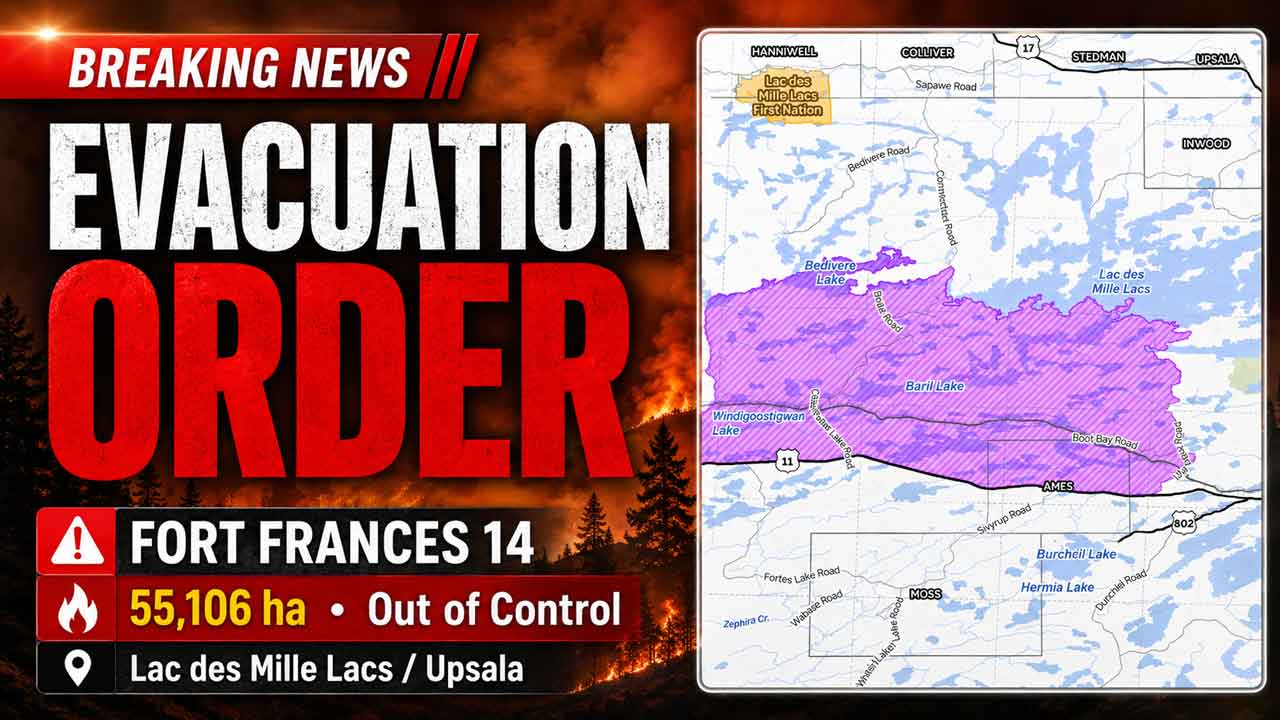 Environment
Updated Evacuation Information for Wildfire Fort Frances 14 (July 17 2026)
Environment
Updated Evacuation Information for Wildfire Fort Frances 14 (July 17 2026)
 Environment
50-hectare wildfire burns between Clearwater and 100 Mile House
Environment
50-hectare wildfire burns between Clearwater and 100 Mile House
 Environment
A powerful movement of healing arrives at Delta’s Discovery Centre
Environment
A powerful movement of healing arrives at Delta’s Discovery Centre
 Environment
Port Coquitlam mayor launches program that removes graffiti on public property within 48 hours
Environment
Port Coquitlam mayor launches program that removes graffiti on public property within 48 hours
 Environment
EU Excludes Soybean Seed from Deforestation Rules
Environment
EU Excludes Soybean Seed from Deforestation Rules
 Environment
Metro Vancouver issues air quality warning as wildfire smoke drifts in
Environment
Metro Vancouver issues air quality warning as wildfire smoke drifts in
More Local Coverage
Latest news Business
AI Market Trends: Q2 2026 Review and Forecast
Business
AI Market Trends: Q2 2026 Review and Forecast
 Politics
Powerful pro-life ad featuring boxing legend to air during final World Cup matches
Politics
Powerful pro-life ad featuring boxing legend to air during final World Cup matches