


The event was a pilot born of dialogues to form local cooperatives for local forest management
‘Remarkable event’: Wildfire Mitigation Summit held in Clearwater Published 2:42 pm Friday, July 17, 2026 In the face of significant wildfire risk in B.C., Clearwater has not remained idle. A recent manifestation of the town’s efforts to be prepared took the form of a Wildfire Mitigation Summit held in Clearwater from July 6 to 7.
The event was hosted by the Wells Gray Community Forest Corporation (WGCFC). According to Casey Macaulay, general manager of the WGCFC, the summit brought 10 subject-matter experts to participate and present to a diverse group of local organizations and professionals. Macaulay explained that over 40 people attended the summit, which involved a full day in the field visiting four unique sites and a half day of lectures.
He specified two goals in hosting the event. First was to guide the Wells Gray Community Forest (WGCF) in the development of strategies for forest management in the Wildland Urban Interface (WUI). The second was to improve collaboration, coordination and consistency of practices between organizations operating in the North Thompson Valley and beyond.
“This event was important to inform local decision-makers and practitioners about the range of values that must be considered in the design of fuel treatments, and to highlight the urgency in the work,” Macaulay said. Topics addressed included: fire ecology, fire behaviour and prediction, forest stand management, forest pathology and root disease, biodiversity, invasive plants, species at risk, Indigenous partnerships, funding opportunities, examples of successful treatment and forest hydrology. Macaulay noted the WGCF is not aware of any similar event ever being held in Clearwater, although there have been annual wildfire roundtables hosted by local and regional governing bodies for many years.
“This event went into much more depth in terms of treatment specifications and considerations,” Macaulay said. In Facebook posts, Clearwater Mayor Merlin Blackwell and the district’s FireSmart coordinator, Chance Breckenridge, both praised the summit. “This was a remarkable event,” Blackwell said.
“So many smart people from around the region, across the province and beyond coming to Clearwater to discuss the real risk to us all, as well as the possible solutions. I learned so much about hydrology, local ecosystems, fire fuel load, forest health, wildfire mitigation science.” Blackwell also noted in the July 9 post that he’d recently attended a wildfire roundtable hosted by Clearwater’s FireSmart coordinator.
Breckenridge, posting on the Clearwater, BC FireSmart page, gave some details about the first day of the summit, which took the participants to four forest sites around Clearwater and into Wells Gray Park. He said each site showed a different approach to managing fuels and wildfire risk. “It also gave everyone a good look at the fuel loads we’re up against, and just how much variety there is in the forests around Clearwater,” he said.
“It’s one thing to talk about this — it’s another to stand in the middle of it and see the differences firsthand.” Macaulay said it is their hope that the summit will carry a legacy in the ongoing discussions between landowners, municipal workers, forestry firms and parks staff. “Ideally it will drive new efforts, partnerships and funding pathways to treat much more of the land in the local interface.”
Pilot project, local cooperatives Macaulay explained some of the background and impetus behind the Wildfire Mitigation Summit. He said rural communities in B.C. are facing a significant threat from wildfires. “This threat has grown from a century of fire suppression and wildfire exclusion from the land,” he explained.
The community forest general manager said fire occurs naturally, but also has a deep history in Indigenous land stewardship in many parts of North America. “Our forests have changed as a result of fire exclusion and our forest and land administration systems are not designed to manage fuel. These forests are now overcrowded and filled with ground and ladder fuels that contribute to wildfire spread and intensity,” he said.
Macaulay went on to say that much of the woody material does not fit into existing forest product markets, meaning fuel treatments are costly to communities. He said this poses a significant barrier to treatment. “Further, there are concerns from conservationists that wildfire mitigation will be used as an excuse to log in sensitive areas, which means that such treatments must be guided by science and in consultation with communities.”
Remarking on the impetus behind the summit, he said WGCF staff were invited to a couple of sessions with Simon Fraser University’s ‘mitigating wildfire initiative’ in the spring. Macaulay said those events focused dialogue between diverse but influential organizations in the wildfire and conservation spaces. “These discussions highlighted the changing and diminishing role of the provincial government in planning or coordinating land and forest management activities,” he said.
“As such, the idea to form local cooperatives was born. The summit was a pilot from this dialogue.” The Wildfire Mitigation Summit in Clearwater was sponsored in part with funding from the Wildfire Resilience Consortium of Canada.
“However, many gave their time and knowledge to both participate in and contribute to the need in Clearwater, recognizing the unique challenges in our landscape,” Macaulay said.
- Published
- Jul 17, 2026
- Updated
- Jul 17, 2026
- Source
- Clearwater Times
- Category
- Environment
- Read time
- 4 min
Key facts
Why this matters locally
This environment story matters locally because it may affect readers, businesses, commuters, families, or public services in British Columbia.
Local impact
BC Post links this item to British Columbia coverage so readers can follow related city updates, weather, traffic, events, and category news in one place.
Timeline
Source and credit
BC Post may summarize, organize, and add local context for reader clarity. Original reporting remains with the listed publisher.
Related Articles
View all Environment
50-hectare wildfire burns between Clearwater and 100 Mile House
Environment
50-hectare wildfire burns between Clearwater and 100 Mile House
 Environment
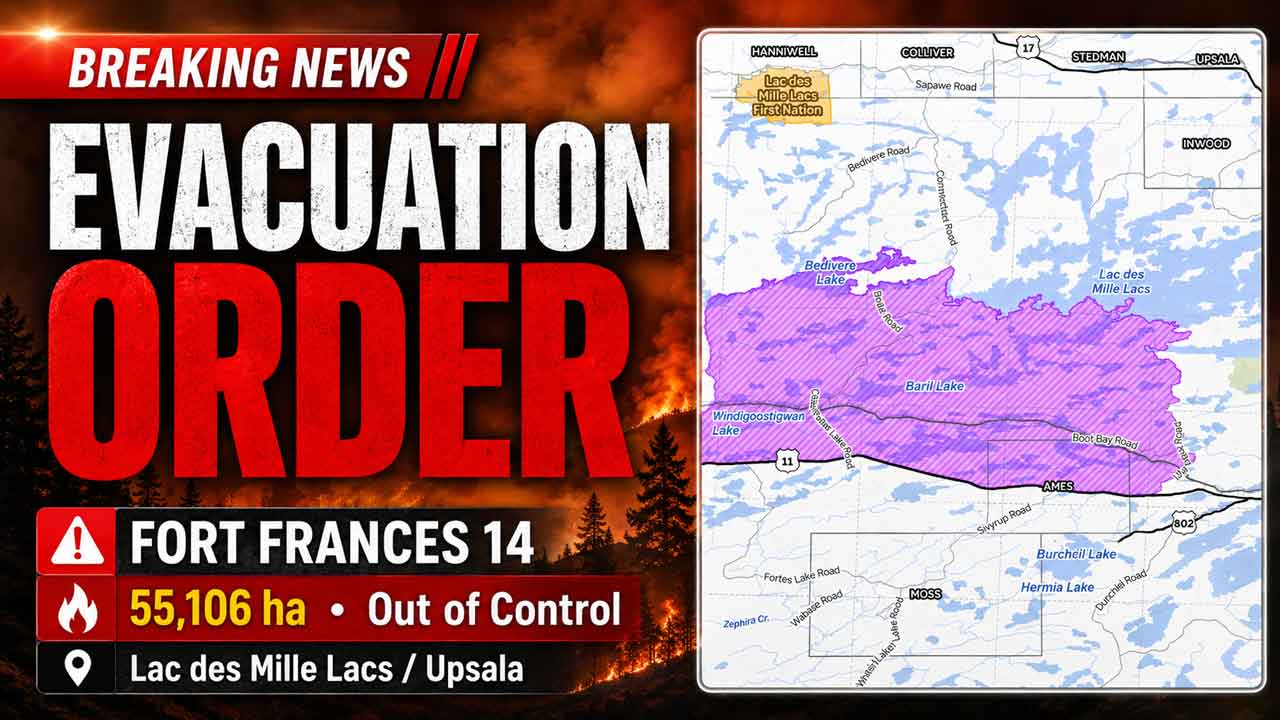
Updated Evacuation Information for Wildfire Fort Frances 14 (July 17 2026)
Environment
Updated Evacuation Information for Wildfire Fort Frances 14 (July 17 2026)
 Environment
A powerful movement of healing arrives at Delta’s Discovery Centre
Environment
A powerful movement of healing arrives at Delta’s Discovery Centre
 Environment
EU Excludes Soybean Seed from Deforestation Rules
Environment
EU Excludes Soybean Seed from Deforestation Rules
 Environment
Metro Vancouver issues air quality warning as wildfire smoke drifts in
Environment
Metro Vancouver issues air quality warning as wildfire smoke drifts in
 Environment
Vancouver forecast in 'sweet spot' but hot temperatures on the way
Environment
Vancouver forecast in 'sweet spot' but hot temperatures on the way
More Local Coverage
Latest news Business
AI Market Trends: Q2 2026 Review and Forecast
Business
AI Market Trends: Q2 2026 Review and Forecast
 Politics
Powerful pro-life ad featuring boxing legend to air during final World Cup matches
Politics
Powerful pro-life ad featuring boxing legend to air during final World Cup matches