

63% support Alberta to B.C. pipeline, though some say they could be convinced otherwise, says Angus Reid poll
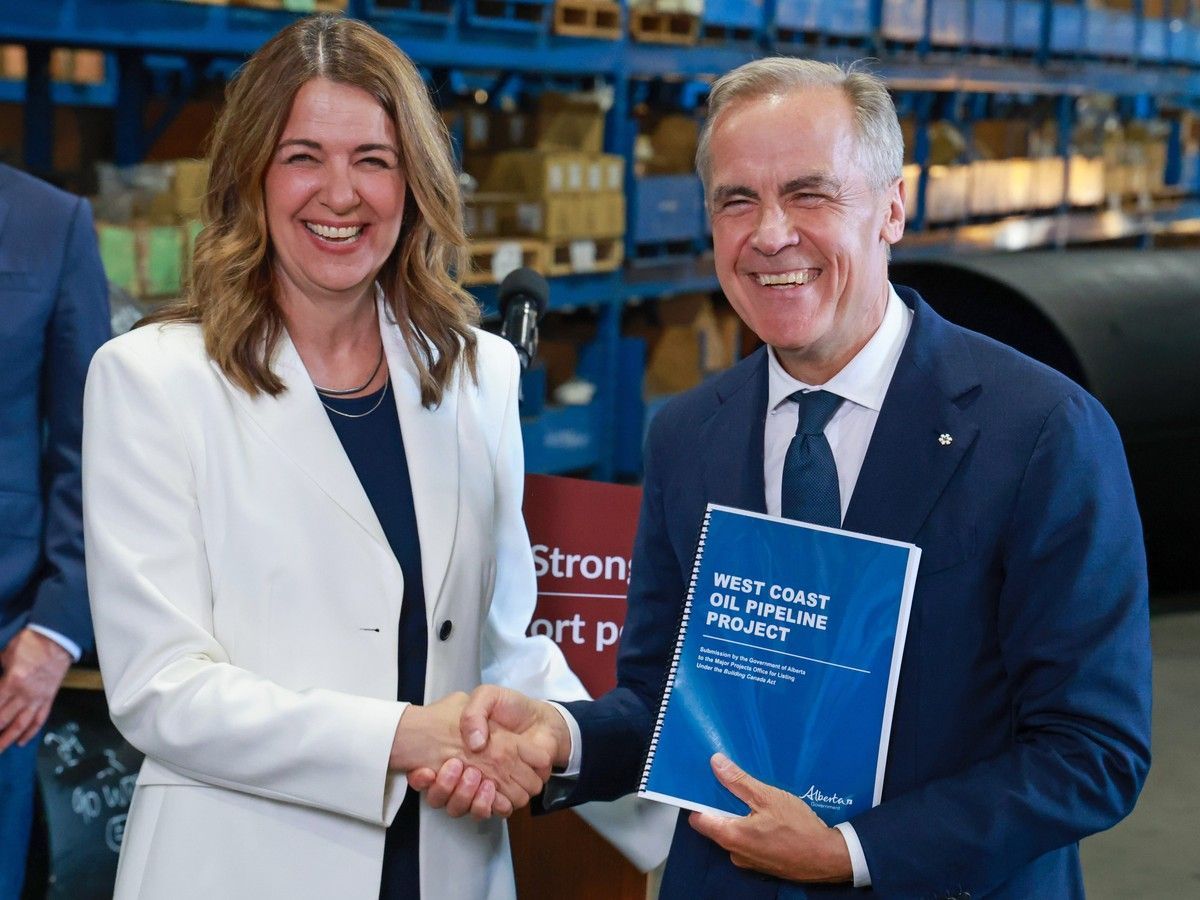
A majority of Canadians are onside with the recently unveiled Alberta-to-British-Columbia pipeline proposal, though some of that support rests on “shifting ground,” says a new poll from the Angus Reid Institute. Its poll of about 2,600 adults conducted online July 10-14 said 63 per cent support the proposal made by Alberta Premier Danielle Smith, and announced with Prime Minister Mark Carney, for a pipeline that would transport one million barrels of crude oil per day from Bruderheim just north of Edmonton to B.C.’s southern coast and cost an estimated $35 billion to $44 billion to build.
“I would say it indicates a strong level of support, given how fraught the debate has been about pipelines over the last decade and a half and the fact that there have been points where pipelines, depending on the route, were absolute non-starters in the eyes of majorities of Canadians,” Shachi Kurl, president of the Angus Reid Institute, said. Public support for various pipeline proposals has varied over the years, from a low of 39 per cent for the rejected Northern Gateway project, which would have ended on B.C.’s northern coast, to a high of 65 per cent for the Energy East pipeline from Alberta to New Brunswick, which was initially proposed in 2016, but cancelled by proponent TC Energy Corp. Support for the B.C. pipeline is strongest in Alberta at 78 per cent and 63 per cent in B.C., where resistance to pipelines has been acute in the past, Ottawa cleared a “mental hurdle” for British Columbians to support this pipeline, which runs along the Trans Mountain expansion corridor, by reconfirming a federal tanker ban on the province’s northern coast, Kurl said.
Nearly nine in 10 people are aware of the B.C. proposal and Ottawa’s Major Projects Office is now assessing the plan to see if it qualifies as a project of national interest. Overall, 55 per cent of Canadians also support the construction of a second pipeline going east from Hardisty in southern Alberta to Sarnia, Ont., that was proposed by Smith and Ontario Premier Doug Ford, though awareness of that project was much lower, with four in 10 people saying they had never heard of it. However, people’s support is not written in stone.
Only a quarter were steadfast in their support for the B.C. pipeline, while a bit more than one third of those who backed the pipeline said they could be convinced otherwise. “In both cases, only about half of Canadians say they have truly made up their minds about the projects, suggesting both proposed pipelines sit on shifting ground,” Angus Reid said in a report on the poll. But Kurl said she doesn’t think people who are equivocating about their support would end up taking to the streets to fight a pipeline.
“But public moods can shift if we all of a sudden see a significant drop in oil prices, if we see massive cost overruns around the actual building of the thing, if along the way Canadians start to hear from First Nations,” she said. “Those are the things that can absolutely shift public opinion on the pipeline project.” The prospect of selling more oil to markets other than the United States was cited by 55 per cent as the most compelling reason to support the Alberta to B.C. pipeline, while 51 per cent agreed that oil is a key
Source and reference
source of income for the Canadian economy. Less than half cited the job and economic growth opportunities. Only 13 per cent said they thought agreeing to build the pipeline would boost national unity, especially in Alberta. “The majority of Canadians are looking at a lot of these issues through the lens of energy sovereignty and carbon diversification because of everything that’s happened with the U.S.,” Kurl said. Canada Mortgage and Housing Corp. (CMHC) said the six-month trend in housing starts fell 2.8 per cent last month to a seasonally adjusted annual rate of 248,123 units. At the same time, the monthly annualized pace slipped six per cent to 238,971 units, while actual housing starts in centres with populations of 10,000 or more fell 13 per cent year over year. — Shantae Campbell, Financial Post This 62-year-old, divorced human resource manager has been living off a small...
Read original source- Published
- Jul 17, 2026
- Updated
- Jul 17, 2026
- Source
- Financial Post
- Category
- Politics
- Read time
- 4 min
Key facts
Why this matters locally
This politics story matters locally because it may affect readers, businesses, commuters, families, or public services in British Columbia.
Local impact
BC Post links this item to British Columbia coverage so readers can follow related city updates, weather, traffic, events, and category news in one place.
Timeline
Source and credit
BC Post may summarize, organize, and add local context for reader clarity. Original reporting remains with the listed publisher.
Related Articles
View all Politics
Powerful pro-life ad featuring boxing legend to air during final World Cup matches
Politics
Powerful pro-life ad featuring boxing legend to air during final World Cup matches
 Politics
Vaughn Palmer: David Eby's slow and expensive step toward involuntary care
Politics
Vaughn Palmer: David Eby's slow and expensive step toward involuntary care
 Politics
Corus rebuts misinformation about future of Global News in Alberta after layoffs
Politics
Corus rebuts misinformation about future of Global News in Alberta after layoffs
 Politics
Pitt Meadows to host information session for city council candidates
Politics
Pitt Meadows to host information session for city council candidates
 Politics
Traditional Catholic response to Cupich’s suicide distortion
Politics
Traditional Catholic response to Cupich’s suicide distortion
 Politics
‘No consequences’: East Van woman says she was targeted by hate-motivated assault
Politics
‘No consequences’: East Van woman says she was targeted by hate-motivated assault
More Local Coverage
Latest news Business
AI Market Trends: Q2 2026 Review and Forecast
Business
AI Market Trends: Q2 2026 Review and Forecast
 Local News
Cowichan sports shorts: rugby, hockey, biking
Local News
Cowichan sports shorts: rugby, hockey, biking