

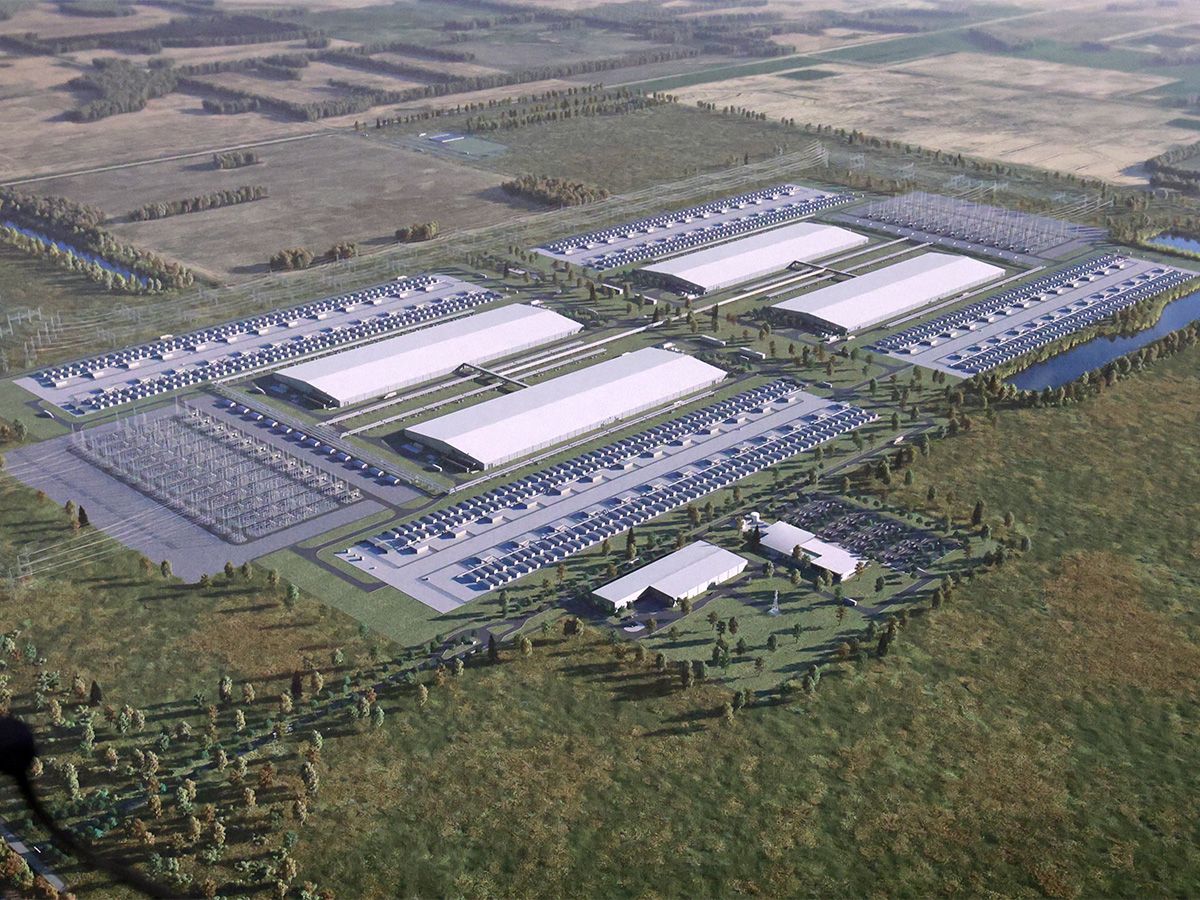
On Nov. 8, 2021, Amazon Web Services announced its Calgary data centre investment. That evening, a conversation took place that fundamentally changed how I thought about Alberta’s economic future. The discussion wasn’t about one data centre. It was about artificial intelligence, cloud computing, and the massive expansion of computing infrastructure that would be required to [...]
On Nov. 8, 2021, Amazon Web Services announced its Calgary data centre investment. That evening, a conversation took place that fundamentally changed how I thought about Alberta’s economic future. The discussion wasn’t about one data centre.
It was about artificial intelligence, cloud computing, and the massive expansion of computing infrastructure that would be required to support the next generation of the global economy. Industry leaders spoke about the need to dramatically increase data centre capacity around the world. The question I left with was simple: Why couldn’t Alberta become one of the world’s premier destinations for this investment?
Alberta possesses many of the ingredients that data centre operators are looking for. We have abundant land, access to energy, a strong engineering workforce, and proximity to major North American markets. We also have a significant competitive advantage that is often overlooked: climate.
Keeping data centres cool is one of the largest operating expenses operators face. Alberta’s cooler temperatures can reduce operating costs by 20 to 30 per cent compared to jurisdictions like Texas, one of our primary competitors for investment. In an industry where efficiency matters, that advantage is meaningful.
However, advantages alone do not create investment. Investors need certainty. One of the biggest challenges Alberta faced was regulatory uncertainty.
If we wanted to compete globally, we needed a clear and predictable environment for companies considering billion-dollar investments. Significant work was undertaken to address these barriers. Government ministers worked together to create Alberta’s AI Data Centres Strategy and provide investors with confidence that Alberta was serious about becoming a leader in this space.
At the same time, Invest Alberta took Alberta’s story to the world. Our team conducted hundreds of meetings with operators, investors, and technology companies across North America, Europe, Asia, the Middle East, Australia, and New Zealand. One of the key elements of our approach was emphasizing projects that would bring new generation capacity online rather than drawing power away from existing consumers.
These facilities would add to Alberta’s energy system, not subtract from it. Today, the results are becoming visible. More than 20 data centre projects are currently before municipal councils seeking approvals.
Another 30 are in various stages of development. Several facilities are already under construction, with many more expected to follow. Meta Platforms’ announcement last week of a $13-billion AI data centre in Sturgeon County is the most recent example.
For generations, Alberta has excelled at converting natural resources into products the world needs. The AI economy offers a new version of that story. We have the opportunity to transform gas molecules into data molecules, converting Alberta’s energy advantage into the computing power that will drive the global economy for decades.
The benefits extend well beyond the data centres themselves. Major investments create significant construction activity and long-term maintenance requirements. They generate demand for skilled trades, engineers, technicians and technology professionals.
They support Alberta companies already operating in the sector. They also create opportunities for our post-secondary institutions. Partnerships between operators and universities can expand research capacity, support innovation, and create pathways for students into emerging industries.
Educational institutions can develop programs that help energy professionals apply their skills in new and growing sectors. Just as importantly, these investments can help support broader infrastructure improvements, from fibre networks to electrical systems. For Alberta, the opportunity means economic diversification, increased tax revenue, stronger technology ecosystems, and greater demand for natural gas resources.
For Canada, it means building critical digital infrastructure and strengthening our ability to compete in a world increasingly driven by artificial intelligence. The global race for AI infrastructure is well underway. The encouraging news is that Alberta is no longer trying to enter the race.
We are already on the track. The challenge now is to maintain momentum, continue reducing barriers, and ensure Alberta remains one of the most competitive jurisdictions in the world for investment. Rick Christiaanse is the former CEO of Invest Alberta.
- Published
- Jul 16, 2026
- Updated
- Jul 16, 2026
- Source
- Calgary Herald
- Category
- Canada
- Read time
- 3 min
Key facts
Why this matters locally
This canada story matters locally because it may affect readers, businesses, commuters, families, or public services in British Columbia.
Local impact
BC Post links this item to British Columbia coverage so readers can follow related city updates, weather, traffic, events, and category news in one place.
Timeline
Source and credit
BC Post may summarize, organize, and add local context for reader clarity. Original reporting remains with the listed publisher.
Related Articles
View all Canada
Vaughn Palmer: NDP was asked four years ago to rescue B.C.'s pulp mills. It didn't
Canada
Vaughn Palmer: NDP was asked four years ago to rescue B.C.'s pulp mills. It didn't
 Canada
Port of Vancouver expansion project referred to Canada’s Major Projects Office
Canada
Port of Vancouver expansion project referred to Canada’s Major Projects Office
 Canada
Vancouver working to avoid ‘the great sigh’ following FIFA World Cup excitement
Canada
Vancouver working to avoid ‘the great sigh’ following FIFA World Cup excitement
 Canada
‘Weather whiplash’ leaves Winnipeg businesses sore
Canada
‘Weather whiplash’ leaves Winnipeg businesses sore


