


By Anant Chandak BENGALURU, July 16 (Reuters) - Most Gulf economies will contract more sharply this year than expected three months ago before rebounding in 2027, a Reuters poll found, as crumbling
By Anant Chandak BENGALURU, July 16 (Reuters) - Most Gulf economies will contract more sharply this year than expected three months ago before rebounding in 2027, a Reuters poll found, as crumbling hopes of a quick U.S.-Iran de-escalation keep the Strait of Hormuz - the region's oil and gas export lifeline -largely closed. The July 7-16 survey of economists was taken as many abandoned assumptions Gulf shipping and energy exports would quickly normalise.
Trump's latest blockade of Iranian shipping and repeated disruptions around Hormuz have lifted oil prices nearly 20% this month to about $85 a barrel. For Gulf Cooperation Council producers, the shock is less about the price of oil than the ability to sell and ship it. Higher crude prices support revenues, but they are not fully offsetting lost export volumes, costlier freight and weaker investor confidence.
Kuwait and Qatar suffered the sharpest forecast downgrades, with both economies now expected to slump 8.1% this year, median forecasts showed, compared with contractions of 4.4% and 6.0% in a poll taken in April. Bahrain's economy will shrink 5.1%, sharper than the 2.9% predicted three months ago, while that of the United Arab Emirates (UAE) is forecast to contract 0.5% after economists had previously predicted stagnation. Saudi Arabia and Oman are the only GCC economies still expected to expand this year, as Saudi can move oil via its East-West pipeline to the Red Sea while Oman's export terminal sits outside the Hormuz Strait, limiting their exposure to the shipping disruption.
The Kingdom's economic growth estimate was cut to 1.4% from 2.6%, below the IMF's latest projection of 1.7%, while Oman's was raised to 3.1% from 2.2%. Estimates varied widely, from a 4.3% contraction to 4.1% growth for Saudi Arabia and from a 2.1% decline to 4.1% expansion for Oman. "I would be quite cautious about taking Gulf GDP forecasts at face value right now," said Marwan Barakat, group chief economist and head of research at Bank Audi.
"The issue is not only the level of oil prices or interest rates, it is the physical ability to move hydrocarbons, goods and people through one of the world's most important chokepoints." "If the disruption remains short-lived then we are likely to see a sharp near-term hit ... followed by a rebound," Barakat said. "But if the disruption becomes prolonged the damage becomes more persistent."
The recovery will be swift next year, according to the latest forecasts. Kuwait topped the 2027 list, expected to grow 10.1%, followed by Qatar at 7.8%, Saudi Arabia with 6.0%, the UAE at 5.8%, Bahrain with 4.5% and Oman at 2.8%.
- Published
- Jul 16, 2026
- Updated
- Jul 16, 2026
- Source
- Yahoo! News
- Category
- Sports
- Read time
- 2 min
Key facts
Why this matters locally
This sports story matters locally because it may affect readers, businesses, commuters, families, or public services in British Columbia.
Local impact
BC Post links this item to British Columbia coverage so readers can follow related city updates, weather, traffic, events, and category news in one place.
Timeline
Source and credit
BC Post may summarize, organize, and add local context for reader clarity. Original reporting remains with the listed publisher.
Related Articles
View all Sports
Thoughts turn to legacy as full-time whistle nears for Vancouver's World Cup
Sports
Thoughts turn to legacy as full-time whistle nears for Vancouver's World Cup
 Sports
Huge parade of naked cyclists promote 'less gas, more ass' in Vancouver
Sports
Huge parade of naked cyclists promote 'less gas, more ass' in Vancouver
 Sports
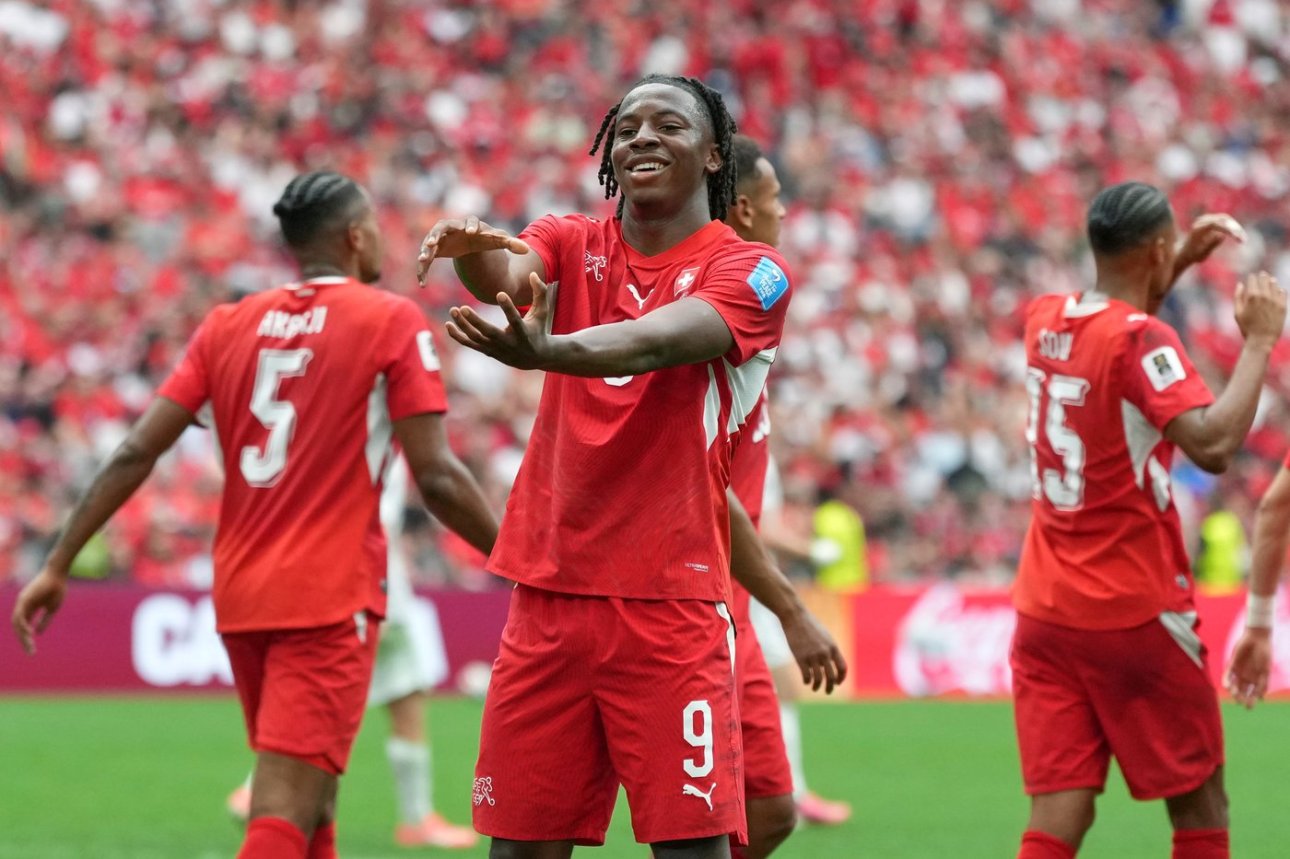
Swiss breakout star Manzambi and 2 others leave training ahead of World Cup clash with Colombia
Sports
Swiss breakout star Manzambi and 2 others leave training ahead of World Cup clash with Colombia
 Sports
World Cup what to know: Argentina’s Lionel Messi faces Egypt’s Mohamed Salah for spot in quarters
Sports
World Cup what to know: Argentina’s Lionel Messi faces Egypt’s Mohamed Salah for spot in quarters
 Sports
Annual Windsor bike show fuels support for 5 Windsor-Essex food banks
Sports
Annual Windsor bike show fuels support for 5 Windsor-Essex food banks
 Sports
Sidney teen to represent Canada at world paddling championships
Sports
Sidney teen to represent Canada at world paddling championships
More Local Coverage
Latest news Business
AI Market Trends: Q2 2026 Review and Forecast
Business
AI Market Trends: Q2 2026 Review and Forecast
 Politics
Powerful pro-life ad featuring boxing legend to air during final World Cup matches
Politics
Powerful pro-life ad featuring boxing legend to air during final World Cup matches