

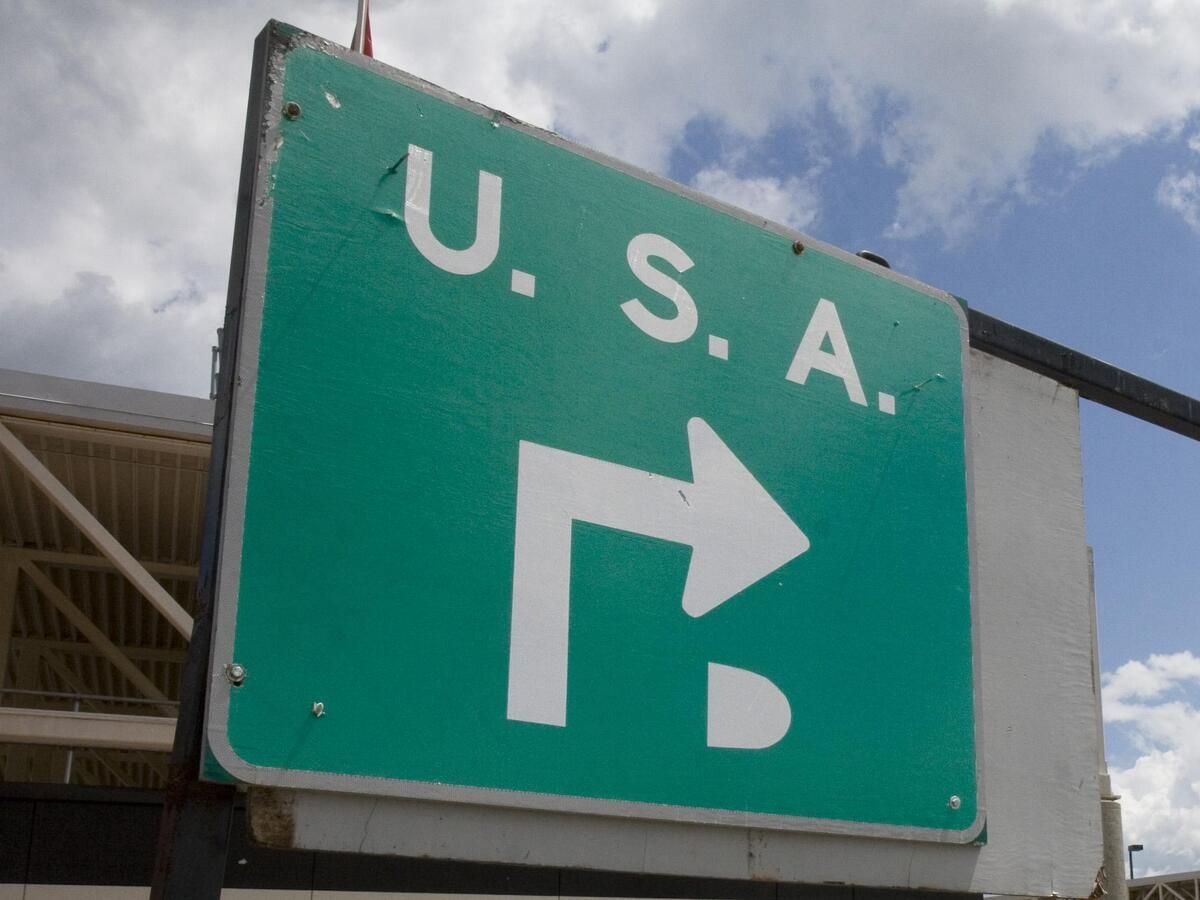
Continued trade uncertainty is doing our economy no favours
Alarm bells went off when KPMG reported last week that 42 per cent of 275 manufacturers it surveyed have already abandoned Canada or have shifted or plan to shift production to the United States. Statistics Canada tells a similar story, with manufacturing GDP falling by 4.1 per cent, with a net loss of 60,000 jobs, since U.S. President Donald Trump began his second term. As if that weren’t bad enough, trade uncertainty has worsened since the KPMG survey was taken in May.
The U.S. has decided not to extend the Canada-U.S.-Mexico Agreement. That means annual reviews for the next decade, which will discourage investment in Canada even further. But is that the whole story?
U.S. tariffs have been a major factor hurting Canada’s trade-exposed manufacturing sector, which sends 70 per cent of its exports to the U.S. But Canada’s lack of competitiveness is also a formidable challenge. Canada has always benefited from trade with our closest market.
Our GDP per capita has generally grown in parallel with the U.S., though we have underperformed at times. In the 1990s growth suffered as we adopted austerity to fix our enormous public deficit problem and raised interest rates to get inflation down. It suffered again after 2015 with low commodity prices and over-burdensome regulations and taxes.
On the other hand, with the U.S. tech sector having almost doubled in size since 2018, there’s no reason not to expect benefits from future trade with the U.S. Our CUSMA partner, Mexico, has seen its exports to the U.S. rise by 24 per cent since January 2025 as multinationals shifted their supply chains to take advantage of CUSMA arrangements in a low-cost economy. Since the beginning of 2025, however, our exports to the U.S. have fallen — if only marginally — despite rising oil and gas mining exports).
With Trump’s steep tariffs on autos, lumber, aluminum, steel and non-CUSMA products, expect more companies to jump over the wall to invest in the faster-growing U.S. market to minimize future risks. But there clearly has been damage. It is not just Canadian manufacturing, with its 1.9-million employees, where output and employment have fallen this past year and half.
Eight of our 18 industries have also contracted, although not as much as manufacturing. The education sector, with over 1.5-million employees, is down 2.4 per cent in both GDP and employment. Professional scientific and technical services, with two-million employees, has seen output fall 0.6 per cent and employment by 0.8 per cent.
Construction output has fallen 0.2 per cent, construction employment 0.9 per cent. Overall, the goods sector (resources, utilities, construction and manufacturing) has seen GDP fall 0.8 per cent and employment one per cent. On the other hand, services GDP is up 1.2 per cent and employment 0.6 per cent since Trump returned to office.
This has enabled the modest overall growth that has taken place: 0.5 per cent in GDP and 0.3 per cent in employment over a year and a half. Most of the overall increase in GDP and employment has come from four sectors: health and social assistance, finance and real estate, transportation and, of course, public administration. On its own, health and social assistance has accounted for almost 90 per cent of employment growth in services.
As for the rest, strong stock markets and money creation have boosted the financial sector, while subsidies and modest deregulation have supported housing. Not only are these sectors less trade-exposed, they have also been favoured by government policies. As for the next few years, don’t hold your breath waiting for a resurgence of growth.
Ottawa is running large deficits, with more spending to come (on defence, for example). In the short term, spending may buoy aggregate demand. But global investors see growing risk from public and private debt that is already 350 per cent of GDP, so higher future bond rates may eventually choke off deficit-led growth.
The Carney government also has an aggressive plan to attract investment for major projects, reversing the outflow of capital experienced in the past decade. But his approach is to reduce regulatory and permitting delays for selected projects, not comprehensive reform to remove obstacles to private-sector growth. A year in, none of the major projects has yet been given final approval.
And even when they get it, we won’t see any big bang to the economy for several years since permitting, Indigenous consultation and construction will take some time. Some projects — high-speed rail, the Churchill port expansion and a pipeline to the B.C. coast — may well not happen at all. If we continue to stall trade negotiations through Donald Trump’s remaining two-plus years, businesses won’t wait to make hard capital allocation decisions.
And a new U.S. administration will bring more economic uncertainty, at least in the short term, even if in the long term it returns policy to more conventional terms. Unless we deal with U.S. trade soon, we are more likely to mimic Europe’s slow growth than return to economic dynamism. That would be bad on us.
- Published
- Jul 17, 2026
- Updated
- Jul 17, 2026
- Source
- Financial Post
- Category
- Top
- Read time
- 4 min
Key facts
Why this matters locally
This top story matters locally because it may affect readers, businesses, commuters, families, or public services in British Columbia.
Local impact
BC Post links this item to British Columbia coverage so readers can follow related city updates, weather, traffic, events, and category news in one place.
Timeline
Source and credit
BC Post may summarize, organize, and add local context for reader clarity. Original reporting remains with the listed publisher.
Related Articles
View all Top
Rock the Lake celebrated its ninth year at Prospera Place this past weekend
Top
Rock the Lake celebrated its ninth year at Prospera Place this past weekend
 Top
Million-dollar contract awarded for Surrey Sport & Leisure Complex renos
Top
Million-dollar contract awarded for Surrey Sport & Leisure Complex renos
 Top
Brunswick Creek wildfire grows, leads to air quality warning in east Fraser Valley
Top
Brunswick Creek wildfire grows, leads to air quality warning in east Fraser Valley
 Top
MLA Jordan Kealy to face jury in sexual assault case
Top
MLA Jordan Kealy to face jury in sexual assault case
 Top
BCWS aircraft helping Kamloops firefighters battle grass fire above Shuswap Road
Top
BCWS aircraft helping Kamloops firefighters battle grass fire above Shuswap Road
 Top
'A sacred place': Delta park to get dedicated ash-scattering site
Top
'A sacred place': Delta park to get dedicated ash-scattering site
More Local Coverage
Latest news Business
AI Market Trends: Q2 2026 Review and Forecast
Business
AI Market Trends: Q2 2026 Review and Forecast
 Politics
Powerful pro-life ad featuring boxing legend to air during final World Cup matches
Politics
Powerful pro-life ad featuring boxing legend to air during final World Cup matches