


From the first call about a whale in distress to the final cut of a rope, Julie Huntington explains the dangerous and delicate work behind Newfoundland and Labrador’s whale rescues
When Julie Huntington’s team receives a report of a whale in trouble, the first thing they need to determine is whether the animal actually needs rescuing. “Many times, the call is from someone who’s not familiar with whales,” Huntington said. “It could be a whale sleeping on the surface, because they say, ‘Oh, it hasn’t moved for hours.’”
A whale resting at the surface may look concerning to someone unfamiliar with their behaviour, she explains. But when fishing gear is involved, the situation changes quickly. Once an entangled whale is confirmed, the rescue begins.
Why are there so many calls for rescue in NL? Huntington said the team has received more reports than it typically would at this point in the season. In a usual year, she said, the team might respond to around six whale disentanglements.
By the middle of 2026, they had already reached that number. “We’ve had probably 40 calls so far,” she said. Not every report results in a rescue.
Some involve repeated sightings of the same whale, while others involve animals that continue moving after being spotted, making it difficult for rescuers to locate them again. According to the Whale Release and Strandings Group’s 2025 report, 17 humpback whales were reported entangled in fishing gear or towing gear in Newfoundland and Labrador last year. The team successfully released seven of those animals alive and gear-free in 2025.
Huntington said whale entanglement numbers can vary from year to year rather than follow a simple pattern. “When we first started doing this, it was like 50 a year,” she said. She explained those numbers came from a different period before the cod moratorium, when fishing practices and the amount of gear in the water were different.
How do whales become entangled? “The gillnets just went in the water for the season,” she said. “We’re hoping that it doesn’t mean more disentanglements, but you just never know.”
Some of the whales the team has responded to this year have been caught in complicated ways, with fishing gear becoming wrapped around different parts of their bodies. “The animal’s moving,” Huntington said. “It can cover distance, and it can go around in circles.”
As a whale struggles against the gear, the entanglement can become worse. “It has these big side fins; it’s opening its mouth to feed, so the poor thing gets a rope in its mouth,” she said. “Then it tries to get out of all of that, and it wraps around, and then it goes around the tail.”
How do you rescue a whale? Once a whale is confirmed to be entangled, the team begins preparing its equipment, loading the boat and working with partners to reach the animal. Huntington said the team works closely with the Department of Fisheries and Oceans (DFO), fishermen and conservation officers during rescues.
But arriving at the whale is only the beginning. The team must first understand how the whale is trapped, where the gear is attached and which parts can safely be removed. “The last thing that you want to cut is the one holding it in place,” Huntington said.
The team works through the gear carefully, removing pieces that are not keeping the whale restrained before tackling the final section that’s holding it. “We like to do the ropes that we can, that aren’t holding it stuck in one place,” she said. “Then we work on the gear that’s holding it in place and take that off last.”
What’s it like working beside a powerful animal like a whale? The rescue team does not enter the water alongside entangled whales. Instead, they work from their boat, using specialized equipment — including poles, grappling tools and knives designed for cutting away fishing gear.
Huntington said safety is always the priority. “It’s a big wild animal,” she said. The power behind a whale’s movements is difficult to understand until you’ve seen it up close.
“The tail is so powerful,” she said. “It can bring its entire body, like 30 to 50 tons of animal, out of the water. It’s a very short distance that it takes in order to breach to come out of the water.”
Are they able to get all the gear off? Huntington said there have been cases where the fishing gear wrapped around a whale was too heavy for the rescue team to lift on its own. In those situations, fishermen have helped by using equipment on their boats to grab the heavy gear underwater and lift it, taking the weight off the whale.
“They drag alongside where the whale is, and then come upon the fishing gear and lift it up,” she said. Once the weight is removed, the rescue team can move closer and cut the gear away. “The whale is relieved of that weight on its body.
So we have to be cautious that it’s not going to start thrashing or moving around,” Huntington said. While lost fishing gear can pose a danger, Huntington said most of the gear removed from whales this year has been active fishing gear. The DFO’s ghost gear program tracks reports of lost fishing gear and works to collect information about where gear has been lost.
When should people call? With whales becoming more visible along Newfoundland and Labrador’s coastline, Huntington said people should not hesitate to report what they see. “We don’t mind a call,” she said.
“It’s better to provide that education, such as that whales do sleep on the surface.” If someone spots a whale they are concerned about, Huntington said that taking a photo from a safe distance can help rescuers assess the situation. But she warned people not to approach the animals.
“It’s good to call us, and we can talk about that,” she said. “It’s better to be cautious and not go too close to the whale because of the gear that the whale could be towing.”
- Published
- Jul 14, 2026
- Updated
- Jul 14, 2026
- Source
- Pniatlantic
- Category
- Environment
- Read time
- 4 min
Key facts
Why this matters locally
This environment story matters locally because it may affect readers, businesses, commuters, families, or public services in British Columbia.
Local impact
BC Post links this item to British Columbia coverage so readers can follow related city updates, weather, traffic, events, and category news in one place.
Timeline
Source and credit
BC Post may summarize, organize, and add local context for reader clarity. Original reporting remains with the listed publisher.
Related Articles
View all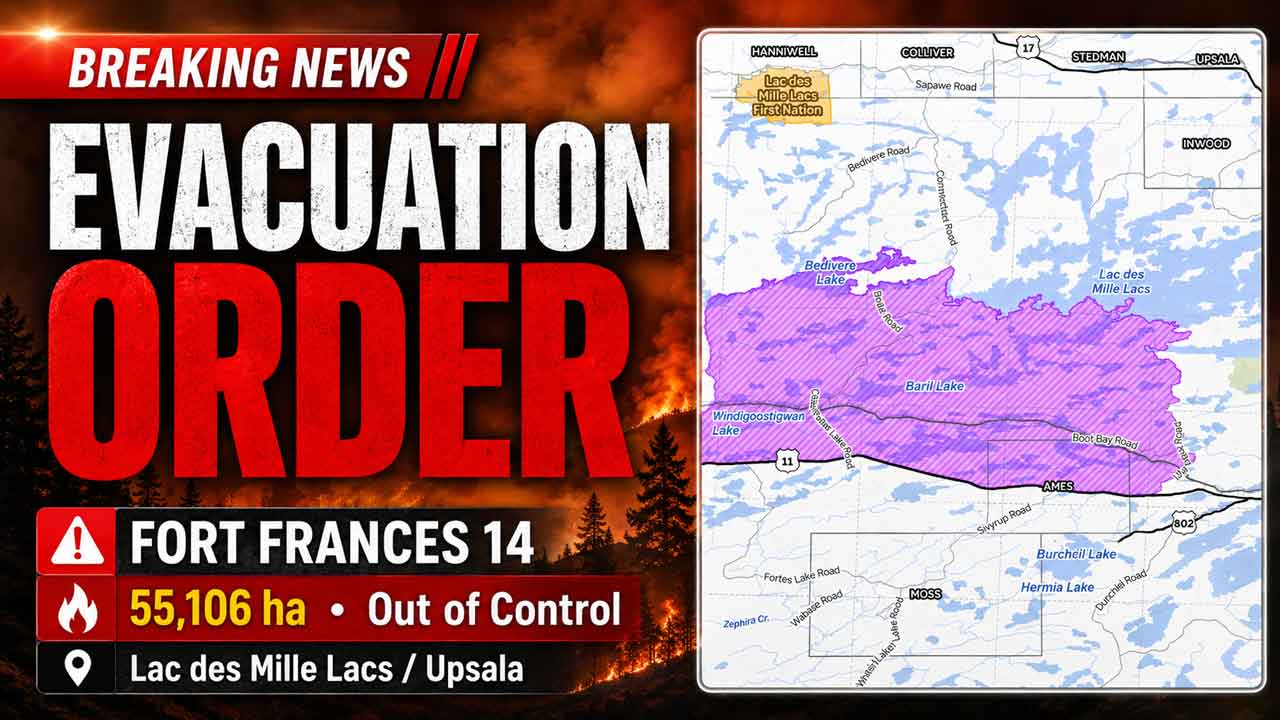 Environment
Updated Evacuation Information for Wildfire Fort Frances 14 (July 17 2026)
Environment
Updated Evacuation Information for Wildfire Fort Frances 14 (July 17 2026)
 Environment
50-hectare wildfire burns between Clearwater and 100 Mile House
Environment
50-hectare wildfire burns between Clearwater and 100 Mile House
 Environment
A powerful movement of healing arrives at Delta’s Discovery Centre
Environment
A powerful movement of healing arrives at Delta’s Discovery Centre
 Environment
Port Coquitlam mayor launches program that removes graffiti on public property within 48 hours
Environment
Port Coquitlam mayor launches program that removes graffiti on public property within 48 hours
 Environment
EU Excludes Soybean Seed from Deforestation Rules
Environment
EU Excludes Soybean Seed from Deforestation Rules
 Environment
Metro Vancouver issues air quality warning as wildfire smoke drifts in
Environment
Metro Vancouver issues air quality warning as wildfire smoke drifts in
More Local Coverage
Latest news Business
AI Market Trends: Q2 2026 Review and Forecast
Business
AI Market Trends: Q2 2026 Review and Forecast
 Politics
Powerful pro-life ad featuring boxing legend to air during final World Cup matches
Politics
Powerful pro-life ad featuring boxing legend to air during final World Cup matches