


A new study utilizes Koopman operator learning to prove that certain complex, chaotic systems have fundamental predictability limits that cannot be overcome by infinite training data.
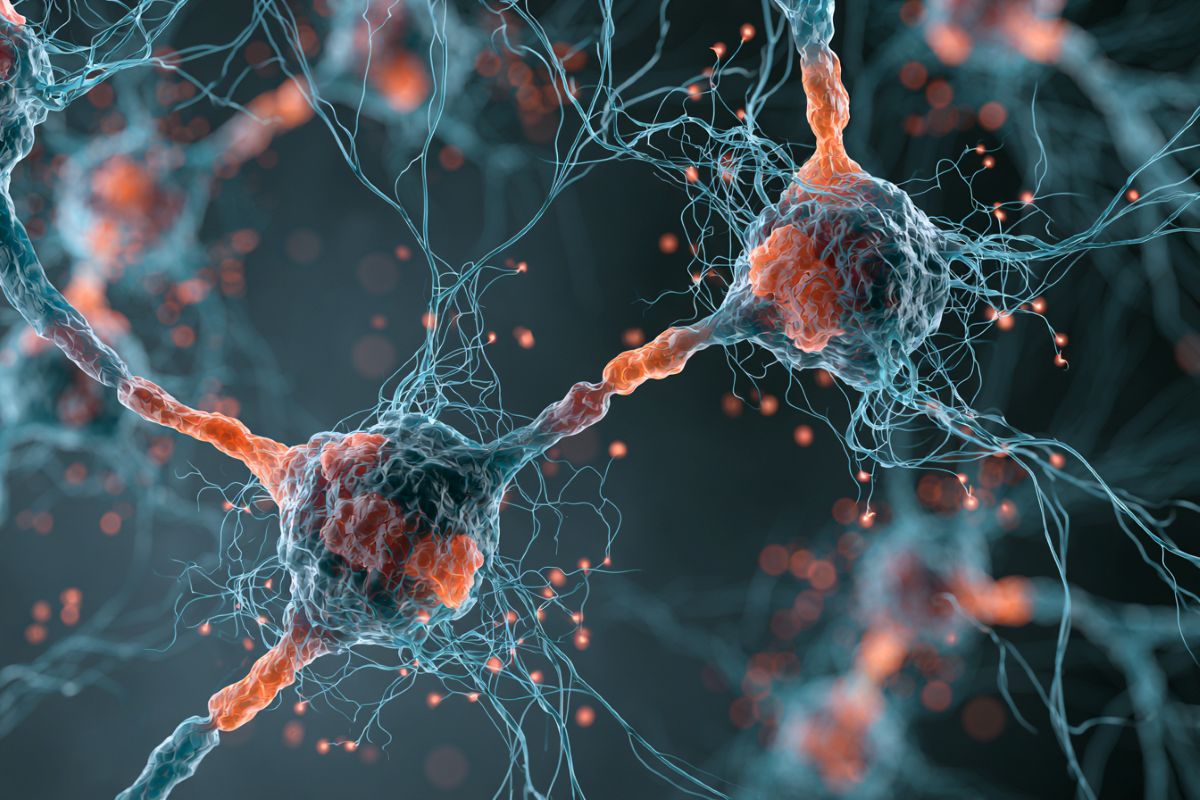
Chaotic environmental systems impose hard mathematical limits on long-term machine learning predictability, demonstrating that raw data scaling cannot prevent eventual algorithmic drift. Credit: Neuroscience News Summary: A new study utilizes Koopman operator learning to prove that certain complex, chaotic systems have fundamental predictability limits that cannot be overcome by infinite training data. By designing adversarial systems to map where machine learning models collapse, the team explained the mathematical root causes of LLM hallucinations, while introducing a highly efficient algorithm with built-in error bounds that successfully mapped hidden Arctic sea ice patterns using a standard laptop.
Key Facts The Infinite Data Myth Overthrown: The research demonstrates that the common tech-industry philosophy of “more data equals guaranteed learning” is mathematically incorrect. Certain highly complex or chaotic problems feature layered patterns that are hidden or impossible to neatly separate, meaning the absolute best an algorithm can score is a coin-flip ($50/50$), rendering the problem mathematically unsolvable regardless of dataset size. Why Chatbots Hallucinate: The mathematical instabilities that break long-term physical prediction explain why large language models (LLMs) like ChatGPT or Claude confidently invent false information over time.
In highly sensitive systems, minute variations in the starting prompt trigger compounding errors that send the model down wildly separate pathways, preserving short-term coherence while entirely losing contact with reality. The Two Pillars of Machine Learning Failure: Dr. Matthew Colbrook’s team identified two specific structural reasons why AI modeling naturally breaks down when interacting with complex environments: Data Insufficiency Verification Failure: The machine learning algorithm possesses no internal mathematical mechanism to determine when it has ingested enough training samples to output a stable, provably certain prediction. Hidden Pattern Obfuscation: Critical tracking coordinates within the dynamic architecture remain mathematically hidden or deeply tangled, making them impossible for standard neural nets to differentiate.
The Chaos Frequency Problem: When an AI analyzes a chaotic system (where tiny changes in starting parameters yield massive divergence), the Koopman operator produces a continuous spread of overlapping frequencies rather than clean, isolated tracking variables. This explains why short-term forecasts remain accurate, while long-term system projections systematically collapse. The Provably Reliable Algorithm: To solve this structural vulnerability, the researchers engineered a novel, mathematically rigorous algorithm featuring built-in, immutable error bounds.
This toolkit gives researchers a real-time certainty meter, verifying exactly when an AI’s output can be trusted without requiring multi-million-dollar supercomputers. The Laptop vs. Supercomputer Benchmark: When stress-tested against 40 years of Arctic climate records, the team’s custom algorithm identified long-lost structural decay patterns in the ice sheets. It consistently outperformed the world’s leading commercial AI systems while running entirely on a basic, consumer-grade standard laptop at a fraction of the computational cost.
Source and reference
Source: University of Cambridge When can we trust the results we get from AI, and when is learning impossible? Researchers have shown that there are some problems that even the most powerful AI can reliably solve, no matter how much data it’s given. The researchers, from the University of Cambridge and the University of California Santa Barbara, designed ‘adversarial’ mathematical systems designed to fool any AI algorithm. Like ethical hackers stress-testing the security of a network, these adversarial systems were designed to map out exactly where and why AI prediction breaks down. Many real-world systems – like those in oceans, the human brain, or robotics – are too complex to describe neatly with equations, so researchers often learn how they behave by using machine learning. But these AI methods don’t always work well, returning unreliable results or poor predictions. Sometimes...
Read original source- Published
- Jul 14, 2026
- Updated
- Jul 14, 2026
- Source
- Neuroscience News
- Category
- Technology
- Read time
- 8 min
Key facts
Why this matters locally
This technology story matters locally because it may affect readers, businesses, commuters, families, or public services in British Columbia.
Local impact
BC Post links this item to British Columbia coverage so readers can follow related city updates, weather, traffic, events, and category news in one place.
Timeline
Source and credit
BC Post may summarize, organize, and add local context for reader clarity. Original reporting remains with the listed publisher.
Related Articles
View all Technology
Transformer-manufacturing company to shut down its Chilliwack facility
Technology
Transformer-manufacturing company to shut down its Chilliwack facility
 Technology
Spectro Cloud Raises $100 Million Series D to Help Customers Move AI Infrastructure Into Production Across Enterprise, Public Sector, Neocloud and Sovereign Cloud Environments
Technology
Spectro Cloud Raises $100 Million Series D to Help Customers Move AI Infrastructure Into Production Across Enterprise, Public Sector, Neocloud and Sovereign Cloud Environments
 Technology
Quebec announces plan to train more aerospace workers as demand surges
Technology
Quebec announces plan to train more aerospace workers as demand surges
 Technology
Apple’s Lawsuit Could Choke OpenAI’s iPhone Rival Before It Even Ships
Technology
Apple’s Lawsuit Could Choke OpenAI’s iPhone Rival Before It Even Ships
 Technology
ECT Reprograms Adult Neurons into a Youthful State
Technology
ECT Reprograms Adult Neurons into a Youthful State
 Technology
GO train users could face delays, cancellations due to ‘crew constraints’: Metrolinx
Technology
GO train users could face delays, cancellations due to ‘crew constraints’: Metrolinx
More Local Coverage
Latest news Business
AI Market Trends: Q2 2026 Review and Forecast
Business
AI Market Trends: Q2 2026 Review and Forecast
 Politics
Powerful pro-life ad featuring boxing legend to air during final World Cup matches
Politics
Powerful pro-life ad featuring boxing legend to air during final World Cup matches