


Temperatures in Thunder Bay reached nearly 40 C on Monday due to a heat wave that's affecting much of northwestern Ontario.
Heat wave brings temperatures of nearly 40 C to Thunder Bay on Monday Much of northwestern Ontario under orange heat warnings Thunder Bay residents, and those across northwestern Ontario, were taking steps to keep cool on Monday as the city and region saw daytime temperatures soar. Parts of northwestern Ontario remained under orange heat warnings on Monday. As of shortly after 3:30 p.m., Environment Canada's weather conditions web page showed temperatures of 39 C in Thunder Bay, while the hottest spot in Canada was the Armstrong airport, at 40 C. "It's a massive area of high pressure centred right now in the state of Iowa, but it's generated heat advisories, heat alerts, heat warnings in areas across the Upper Plains states of the U.S., parts of Manitoba, across Ontario, the Great Lakes states as well and even into the province of Quebec," said Geoff Coulson, meteorologist with Environment Canada.
"It's a wide-ranging system that's bringing much above seasonal temperatures." Coulson said the long-term average high for this time of year in Thunder Bay is 24 C. Environment Canada said the heat wave is expected to continue through Tuesday evening, and possibly into Wednesday. Forecasts for Thunder Bay call for maximum daytime highs of 34 to 40 C, and overnight lows between 19 and 23 C. "The fact that we're not cooling off overnight is just more stress on the human body and makes these heat warnings all the more powerful," Coulson said.
And in addition to the heat, people in the region are also experiencing smoke in the air from forest fires burning across northwestern Ontario. "We've got in some cases a significant wildfire activity, especially to the west of Thunder Bay," Coulson said. "With the winds coming in from the west, we're seeing plumes of of this wildfire smoke moving eastwards towards the Thunder Bay area."
"That can lead to locally poor air quality readings in those areas under the influence of the wildfire smoke," he said. "So it's almost a double whammy. We're getting the heat and humidity already from the the large scale weather system, but then adding to it with concerns locally at least of of poor air quality readings due to wildfire smoke."
Environment Canada advised people to watch for early signs of heat exhaustion, including headaches, nausea, dizziness, thirst, and intense fatigue. People are also advised that heat stroke is a medical emergency. Signs can include red and hot skin, dizziness, nausea, confusion, and a change in consciousness.
If someone is showing signs of heat stroke, call 911.
- Published
- Jul 13, 2026
- Updated
- Jul 13, 2026
- Source
- Cbc
- Category
- Environment
- Read time
- 2 min
Key facts
Why this matters locally
This environment story matters locally because it may affect readers, businesses, commuters, families, or public services in British Columbia.
Local impact
BC Post links this item to British Columbia coverage so readers can follow related city updates, weather, traffic, events, and category news in one place.
Timeline
Source and credit
BC Post may summarize, organize, and add local context for reader clarity. Original reporting remains with the listed publisher.
Related Articles
View all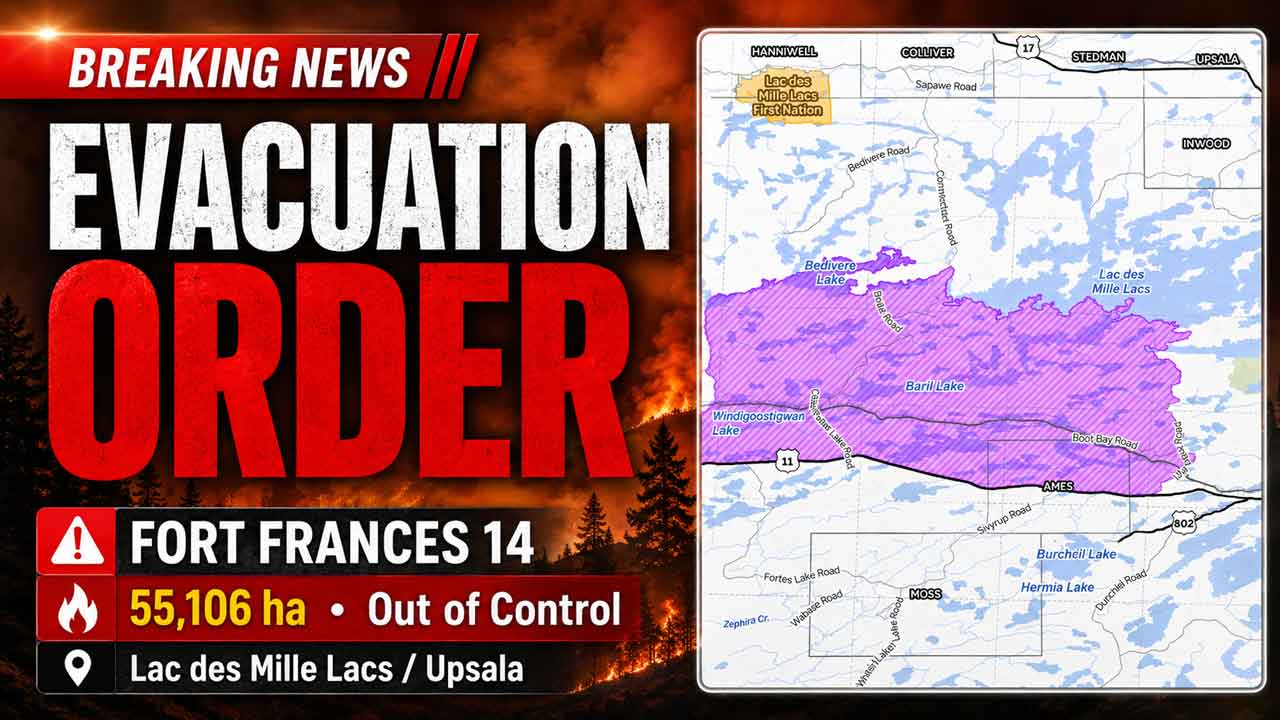 Environment
Updated Evacuation Information for Wildfire Fort Frances 14 (July 17 2026)
Environment
Updated Evacuation Information for Wildfire Fort Frances 14 (July 17 2026)
 Environment
50-hectare wildfire burns between Clearwater and 100 Mile House
Environment
50-hectare wildfire burns between Clearwater and 100 Mile House
 Environment
A powerful movement of healing arrives at Delta’s Discovery Centre
Environment
A powerful movement of healing arrives at Delta’s Discovery Centre
 Environment
Port Coquitlam mayor launches program that removes graffiti on public property within 48 hours
Environment
Port Coquitlam mayor launches program that removes graffiti on public property within 48 hours
 Environment
EU Excludes Soybean Seed from Deforestation Rules
Environment
EU Excludes Soybean Seed from Deforestation Rules
 Environment
Metro Vancouver issues air quality warning as wildfire smoke drifts in
Environment
Metro Vancouver issues air quality warning as wildfire smoke drifts in
More Local Coverage
Latest news Business
AI Market Trends: Q2 2026 Review and Forecast
Business
AI Market Trends: Q2 2026 Review and Forecast
 Politics
Powerful pro-life ad featuring boxing legend to air during final World Cup matches
Politics
Powerful pro-life ad featuring boxing legend to air during final World Cup matches