


Lakelands Public Health urges area residents to take precautions to protect against heat-related illnesses during Yellow Heat Warning issued for Haliburton, Kawartha Lakes, Northumberland and Peterborough
Hot weather can make for uncomfortable days and nights, but it can be extremely dangerous, even deadly, for some people and pets, especially young children, older adults and anyone spending a lot of time outdoors. Extreme heat events have been increasing in frequency and severity, due to climate change, and can be dangerous. Environment and Climate Change Canada (ECCC) has issued a yellow-level heat warning for the Haliburton, Kawartha, Northumberland and Peterborough region.
It is expected to remain in effect until Thursday. During this period, conditions are forecast to pose a risk to health and safety, including humidex levels of between 38 and 45. The ECCC’s recently launched colour-coded system helps residents better understand the level of risk and take appropriate precautions.
Yellow warning (moderate impact) - Increased risk of heat-related illness - People spending time outdoors and vulnerable individuals may be affected - Residents should take precautions and stay informed Orange warning (high impact) - Higher risk of heat-related illness - People may need to reduce outdoor activities, especially during the hottest parts of the day - Vulnerable individuals may require additional support and monitoring - Residents should limit outdoor activity and stay cool Red warning (extreme impact) - Extreme risk of heat-related illness or death - Anyone spending time outdoors is at increased risk - Major disruptions to transportation, infrastructure and essential services are possible - Residents should take immediate precautions and follow emergency guidance During extremely hot and humid weather, residents are reminded to never leave children or pets alone in a closed or parked vehicle; drink lots of water, even if they don’t feel thirsty; stay in the shade or indoors as much as possible; take regular breaks when working outdoors; wear loose-fitting, light-coloured clothing; and avoid strenuous exercise or physical activity during the hottest part of the day (usually between noon and 4 p.m.).
It’s also important to check in regularly with family members, neighbours, friends and others who may be more vulnerable to heat. Extreme heat can affect health Public health cautions that heat-related illnesses — which includes dehydration, heat cramps, heat exhaustion and heat stroke — can be very dangerous, especially to those most vulnerable, including older adults, some people with disabilities or chronic diseases, people who are pregnant, and children and infants. Risk can also be higher for people who work outdoors, people who are unhoused and those who take medications that affect thermoregulation.
Medical attention should be sought if experiencing such symptoms as tiredness and weakness, dizziness, rash, nausea or vomiting, headache, extreme thirst or decreased urination/unusually dark yellow urine. If any of these occur, immediately move to a cool place and drink water. Heat stroke is a medical emergency.
Symptoms of heat stroke include: - body temperature over 39 C (102 F) - hot, red skin that may feel dry - throbbing headache - dizziness/fainting or passing out - severe nausea or vomiting - trouble speaking clearly - unusual co-ordination - fast breathing or faint, fast heartbeat - confusion or disorientation - very little dark urine If you or someone you are caring for has signs of heatstroke, call 9-1-1 immediately. Air conditioners and fans are ideal, but people can help keep their homes cooler by closing blinds and curtains, turning off heat-generating lights or appliances, and preparing meals that don’t require using ovens or stoves, especially natural gas/propane appliances.
There are also plenty of spaces across the region where people can cool off including splash pads, recreation centres, cooling stations (check municipal websites for locations) and public libraries. There are also many public beaches to be found; however, be sure to visit the public health’s beach water monitoring page at LakelandsPH.ca/inspections-data-and-reports/inspections/beach-water-monitoring to check safety listings.
- Published
- Jul 13, 2026
- Updated
- Jul 13, 2026
- Source
- The Peterborough Examiner
- Category
- Environment
- Read time
- 3 min
Key facts
Why this matters locally
This environment story matters locally because it may affect readers, businesses, commuters, families, or public services in British Columbia.
Local impact
BC Post links this item to British Columbia coverage so readers can follow related city updates, weather, traffic, events, and category news in one place.
Timeline
Source and credit
BC Post may summarize, organize, and add local context for reader clarity. Original reporting remains with the listed publisher.
Related Articles
View all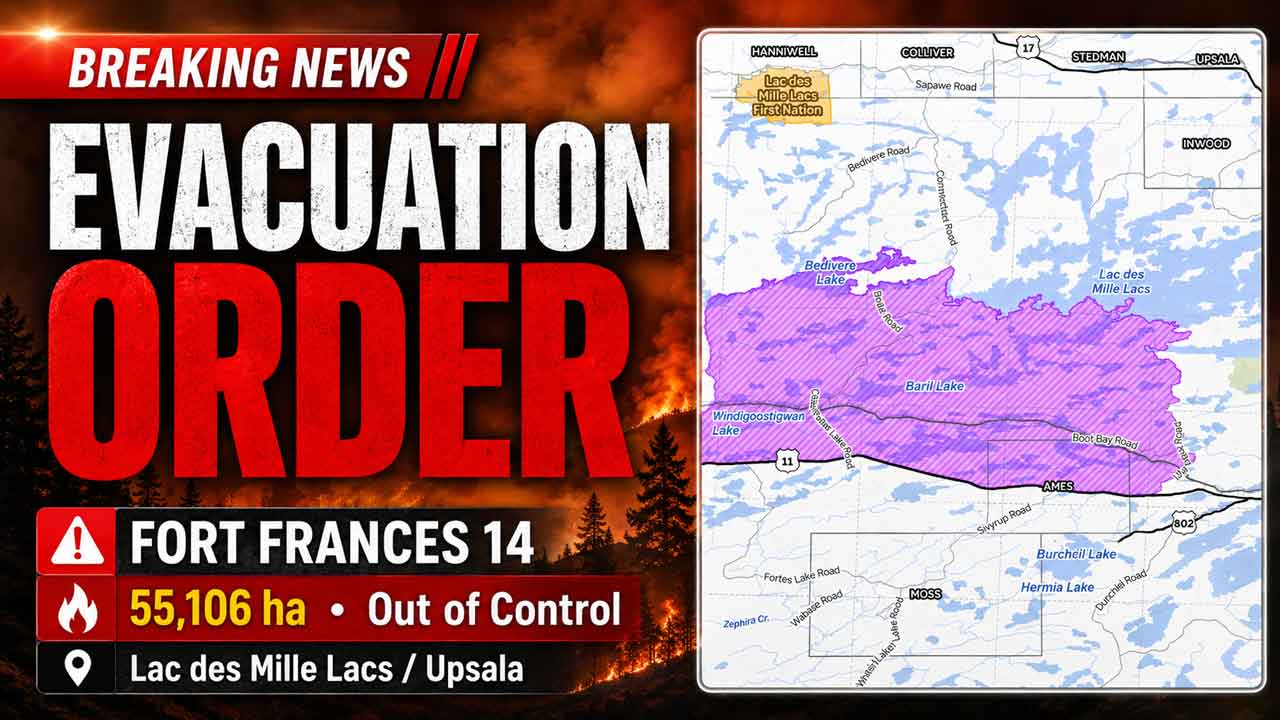 Environment
Updated Evacuation Information for Wildfire Fort Frances 14 (July 17 2026)
Environment
Updated Evacuation Information for Wildfire Fort Frances 14 (July 17 2026)
 Environment
50-hectare wildfire burns between Clearwater and 100 Mile House
Environment
50-hectare wildfire burns between Clearwater and 100 Mile House
 Environment
2 wildfires north of Anahim Lake currently out-of-control
Environment
2 wildfires north of Anahim Lake currently out-of-control
 Environment
A powerful movement of healing arrives at Delta’s Discovery Centre
Environment
A powerful movement of healing arrives at Delta’s Discovery Centre
 Environment
Port Coquitlam mayor launches program that removes graffiti on public property within 48 hours
Environment
Port Coquitlam mayor launches program that removes graffiti on public property within 48 hours
 Environment
'Fending for ourselves' after Manitoba wildfire forces evacuation: O-Pipon-Na-Piwin leaders
Environment
'Fending for ourselves' after Manitoba wildfire forces evacuation: O-Pipon-Na-Piwin leaders
More Local Coverage
Latest news Business
AI Market Trends: Q2 2026 Review and Forecast
Business
AI Market Trends: Q2 2026 Review and Forecast
 Politics
Powerful pro-life ad featuring boxing legend to air during final World Cup matches
Politics
Powerful pro-life ad featuring boxing legend to air during final World Cup matches
 Top
‘Entire city’ asked to help search for missing 11-year-old Parker: Calgary police
Top
‘Entire city’ asked to help search for missing 11-year-old Parker: Calgary police