

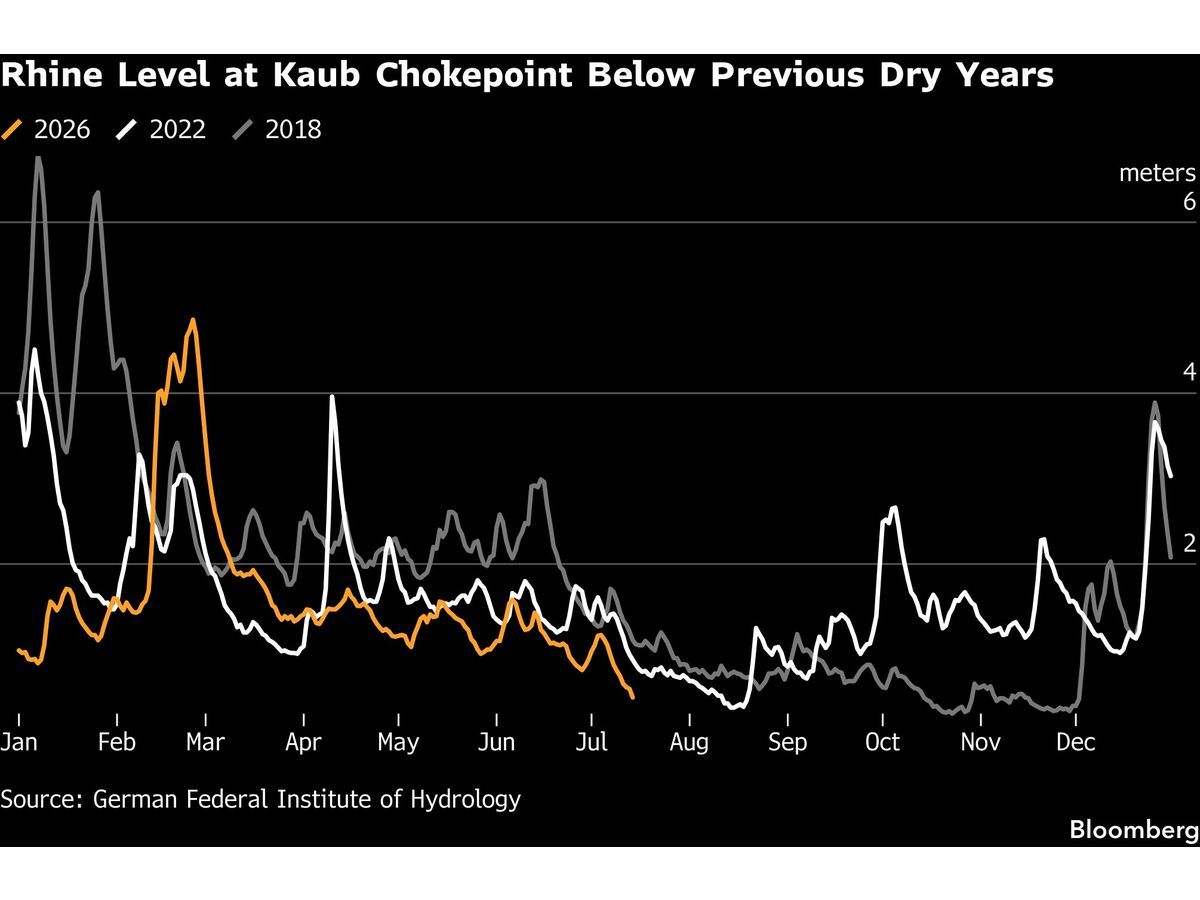
Germany’s manufacturing sector is at risk of disruption as dry weather again hampers shipments on the country’s most important inland waterway, clouding the outlook for a revival of Europe’s biggest economy.
(Bloomberg) — Germany’s manufacturing sector is at risk of disruption as dry weather again hampers shipments on the country’s most important inland waterway, clouding the outlook for a revival of Europe’s biggest economy. The Rhine river’s water levels have dropped to an extent that vessels have to reduce their loads, driving up transport costs, said Fabian Spiess, deputy director of the BDB, the country’s main inland-shipping trade group. That’s a problem for manufacturers including Thyssenkrupp AG and BASF SE that rely on deliveries of goods like coal, crude oil and chemicals by barge.
Thyssenkrupp said its Duisburg plant has been affected as the steelmaker had to suspend its own pusher-boat service and switch to external vessels that can navigate the current levels. BASF had to increase the number of ships in service because they’re forced to operate at a reduced capacity. “Another prolonged period of low water would likely weigh on industrial output, adding to the challenges facing an already weak sector and posing downside risks to our forecast for a gradual recovery following the energy price shock,” Martin Ademmer of Bloomberg Economics said Wednesday in a note.
Firms are probably better prepared now compared to similar episodes in the past, cushioning the potential blow, he added. The German government has been trying to engineer a recovery from years of stagnation with domestic reforms as well as greater spending on infrastructure and defense. The effort to revive growth has been complicated by the conflict in the Middle East, which prompted Berlin in April to halve its 2026 growth forecast to 0.5%.
In 2018, low Rhine water levels that lasted for months cost the German economy about 0.4% of output, according to the Kiel Institute for the World Economy. Another dry spell in 2022 caused disruptions shortly after Europe was hit by the fallout from Russia’s attack on Ukraine. This year, the problem is compounded by a lack of rail alternatives, as a key freight route along the right bank of the river is closed for works, according to Deutsche Bank AG economist Marc Schattenberg.
After positive data for the second quarter, “transport-related supply-chain delays — on top of the current geopolitical backdrop — would be an unwelcome headwind for the stabilizing manufacturing industry,” Schattenberg said in a note. However, given the many factors currently at play, it’s “difficult to isolate a precise GDP effect unless disruptions become severe.” Another question is whether the situation will boost inflation just as the European Central Bank ponders whether to add to June’s interest-rate hike to contain the price spike triggered by the Iran war.
Executive Board member Isabel Schnabel cited the Rhine this month as one factor that could keep price growth elevated. Daniel Hartmann, an analyst at Bantleon AG, reckons that Rhine water levels alone won’t push up German inflation by more than 0.2 percentage points. But they could add to wider challenges with dry weather, including higher food prices, he said.
- Published
- Jul 14, 2026
- Updated
- Jul 14, 2026
- Source
- Financial Post
- Category
- Environment
- Read time
- 2 min
Key facts
Why this matters locally
This environment story matters locally because it may affect readers, businesses, commuters, families, or public services in British Columbia.
Local impact
BC Post links this item to British Columbia coverage so readers can follow related city updates, weather, traffic, events, and category news in one place.
Timeline
Source and credit
BC Post may summarize, organize, and add local context for reader clarity. Original reporting remains with the listed publisher.
Related Articles
View all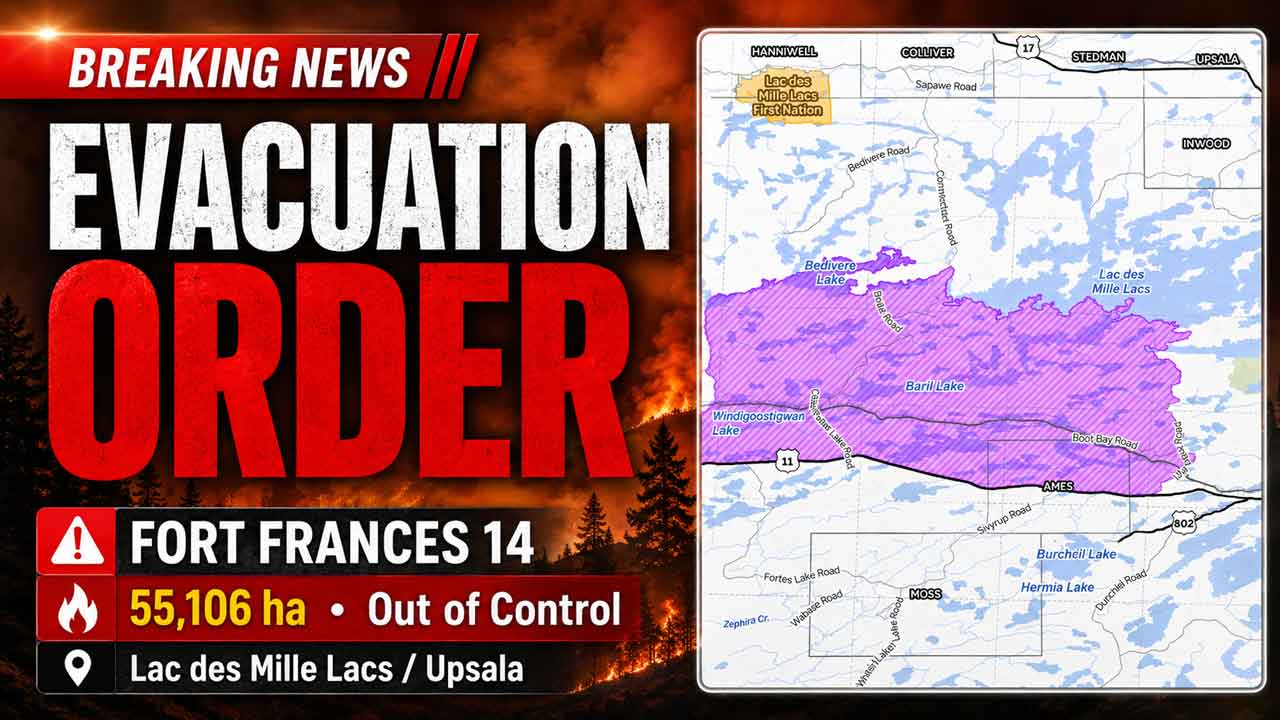 Environment
Updated Evacuation Information for Wildfire Fort Frances 14 (July 17 2026)
Environment
Updated Evacuation Information for Wildfire Fort Frances 14 (July 17 2026)
 Environment
50-hectare wildfire burns between Clearwater and 100 Mile House
Environment
50-hectare wildfire burns between Clearwater and 100 Mile House
 Environment
A powerful movement of healing arrives at Delta’s Discovery Centre
Environment
A powerful movement of healing arrives at Delta’s Discovery Centre
 Environment
Port Coquitlam mayor launches program that removes graffiti on public property within 48 hours
Environment
Port Coquitlam mayor launches program that removes graffiti on public property within 48 hours
 Environment
2 wildfires north of Anahim Lake currently out-of-control
Environment
2 wildfires north of Anahim Lake currently out-of-control
 Environment
EU Excludes Soybean Seed from Deforestation Rules
Environment
EU Excludes Soybean Seed from Deforestation Rules
More Local Coverage
Latest news Business
AI Market Trends: Q2 2026 Review and Forecast
Business
AI Market Trends: Q2 2026 Review and Forecast
 Politics
Powerful pro-life ad featuring boxing legend to air during final World Cup matches
Politics
Powerful pro-life ad featuring boxing legend to air during final World Cup matches
 Local News
Cowichan sports shorts: rugby, hockey, biking
Local News
Cowichan sports shorts: rugby, hockey, biking