


Cardinal Daniel DiNardo praised Pope Leo XIV’s clear and decisive leadership, even as concerns continue over the pope’s encyclical, ‘synodality,’ and episcopal appointments.
(LifeSiteNews) — Texans can rest assured that Pope Leo XIV is leading the Catholic Church with compassion, resolve, and deliberate clarity, according to Cardinal Daniel DiNardo, Archbishop Emeritus of Galveston-Houston. Catholics may recall that Cardinal DiNardo was responsible for announcing in 2023 the removal of Bishop Joseph Strickland by Pope Francis after an apostolic visitation determined it was “not feasible” for Strickland to remain as bishop of the Diocese of Tyler, Texas. Three years later, after DiNardo’s participation in the second extraordinary consistory of 2026 convened by Pope Leo XIV on June 26-27 in Rome, the cardinal offered strong reassurance to the faithful in Texas.
“I think Texans can be completely assured that Pope Leo is governing the Church very, very well with kindness, but with decisiveness when it’s necessary,” he stated. The gathering drew 178 cardinals from six continents for two days of discussion and consultation. Cardinals met in language-based groups to address pressing issues, including “synodality” and the pope’s recent encyclical Magnifica Humanitas.
Participants reported back to the full assembly, fostering what DiNardo described as “good dialogue.” “The point of the consistory, I think, is the pope wants to hear from all the cardinals,” DiNardo explained. “The College of Cardinals now is drawn from all over the world ...
so that you get quite a point of view.” His own English-language group included leaders from Canada, Nigeria, India, and elsewhere. Cardinal DiNardo highlighted Pope Leo’s leadership style as measured and purposeful.
“He’s a canonist, so I think you’ll see in Pope Leo everything is done with a great sense of purpose. He’s not flashy. Everything is done very clearly.”
The pope listened attentively, taking personal notes during sessions. He remains focused on reviewing the Roman Curia and advancing synodality discussions. DiNardo emphasized that Texas Catholics’ perspectives reach the highest levels through representation in the College of Cardinals.
“Insofar as one of the cardinals from Texas, our particular point of view always gets into the consistory.” During the consistory, DiNardo spoke privately with the pope about the Diocese of Amarillo, where he serves as apostolic administrator while awaiting a new bishop. He described Pope Leo as “very American” in his approachable manner, blending warmth with resolve.
Bishop Strickland: Leo’s encyclical ‘obscures the primacy of God’ Yet another bishop from Texas has expressed an “unease” with some of the “broader theological shift” represented in Pope Leo XIV’s first encyclical that was a focal point of discussion during the consistory. In May, Bishop Joseph Strickland, former ordinary of the Diocese of Tyler, Texas, expressed concerns that Magnifica Humanitas “risks placing man at the center in a way that obscures the primacy of God.” The language of the new papal letter “centers on human flourishing, human vulnerability, human solidarity, human fraternity, human communion, human relationships, human participation, and the preservation of humanity itself,” Strickland wrote at the time.
“The repeated emphasis creates the impression that the primary crisis of the modern world is ‘dehumanization,’ rather than sin against God,” the bishop said. “Evil is often described in terms of fragmentation, domination, exclusion, technological reductionism, or broken relationships, rather than rebellion against divine law and the need for repentance and conversion.” Cardinal Müller: Synodality a ‘hostile takeover’ of the Church With regard to “synodality,” Cardinal Gerhard Müller ripped this concept in 2022 under the pontificate of Francis calling this synodal process a “hostile takeover” of the Church that threatens to “end” Catholicism.
“This is a system of self-revelation and is the occupation of the Catholic Church” and “the hostile takeover of the Church of Jesus Christ, which is a column of the revealed truth,” Cardinal Müller told EWTN host Raymond Arroyo at the time. “This has nothing to do with Jesus Christ, with the Triune God, and they think doctrine is only like a program of a political party who can change it according to their voters.” Yet in his first address after his election on May 8, 2025, Pope Leo affirmed “we want to be a synodal Church,” and in May, Cardinal Reinhard Marx of Germany celebrated that Pope Leo XIV “stands in clear continuity with Pope Francis.”
Pope Leo’s appointments promote heterodox views Concerning the appointment of bishops, the Church has always confirmed the bishop’s solemn duty to safeguard the deposit of faith that it may be handed down to successive generations in all its integrity and vitality. Expressing as much, Pope St. Pius X quoted the great reformer after the Council of Trent, St. Charles Borromeo, affirming “the Bishop must be eternally on guard and continually vigilant in preventing the contagious disease of heresy from entering among his flock.” And should such a tragedy occur, “he must use every means at his command to expel it immediately.”
Echoing this duty, the Second Vatican Council affirms that among the “principal duties of bishops” is “vigilantly warding off any errors that threaten their flock.” And Pope St. John Paul II also reminded a group of American bishops in 1982 of their vital role in maintaining the “faithful custody of the deposit of faith” and their “duty to defend the word of God against whatever would compromise its purity and integrity.” Yet, after only 14 months in the Chair of Peter, Pope Leo XIV has appointed bishops who reject the Church’s teaching on sexuality, support the blessing of same sex “couples,” and impossibilities such as “women’s ordination,” attend Masonic Lodge opening ceremonies, and more.
With regard to the consistory, Cardinal DiNardo maintained that “the meetings were excellent,” stating they addressed “some general themes and the pope will deal with them.” He also told the Texas Catholic Herald that his trip to Rome was “ultimately for the good of Catholics everywhere, including those in Texas.” RELATED:
- Published
- Jul 16, 2026
- Updated
- Jul 16, 2026
- Source
- Lifesite
- Category
- Politics
- Read time
- 4 min
Key facts
Why this matters locally
This politics story matters locally because it may affect readers, businesses, commuters, families, or public services in British Columbia.
Local impact
BC Post links this item to British Columbia coverage so readers can follow related city updates, weather, traffic, events, and category news in one place.
Timeline
Source and credit
BC Post may summarize, organize, and add local context for reader clarity. Original reporting remains with the listed publisher.
Related Articles
View all Politics
Powerful pro-life ad featuring boxing legend to air during final World Cup matches
Politics
Powerful pro-life ad featuring boxing legend to air during final World Cup matches
 Politics
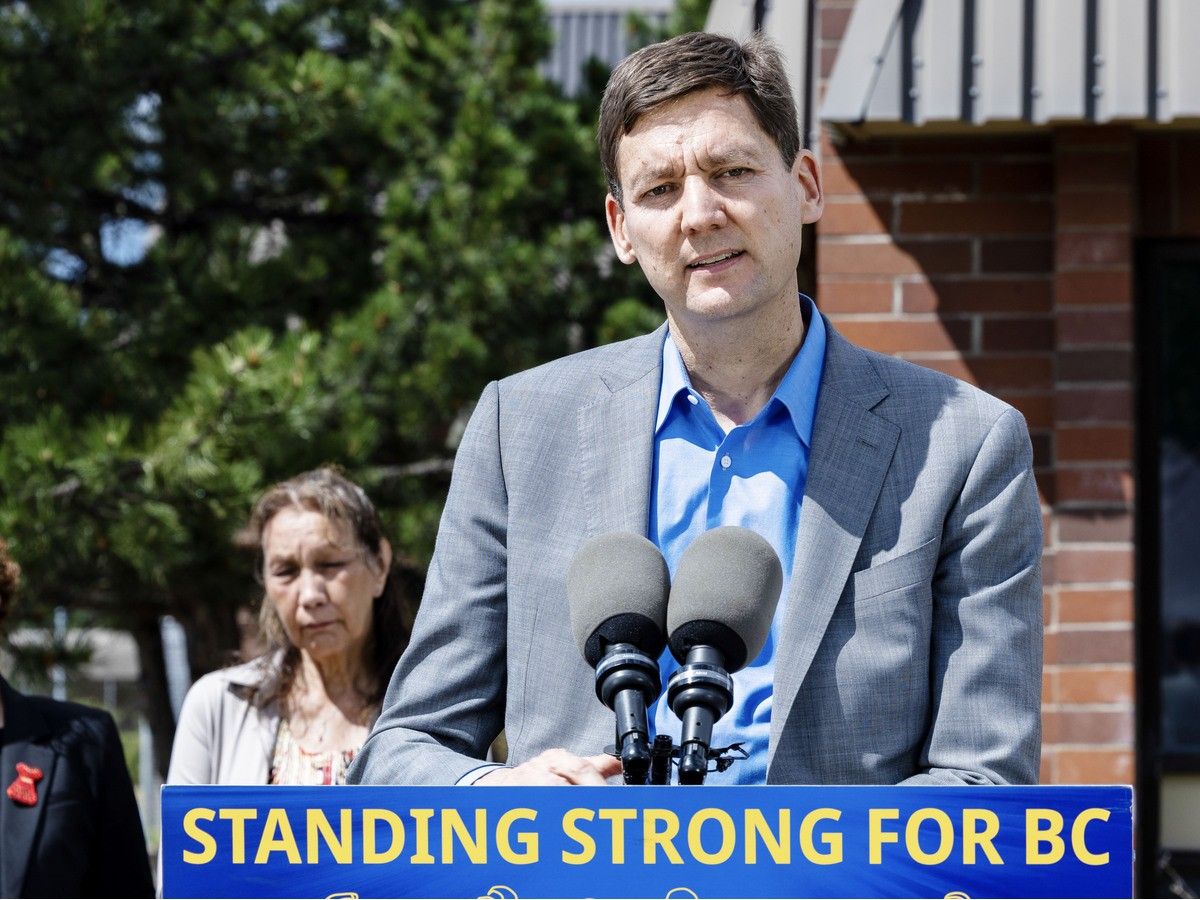
Vaughn Palmer: David Eby's slow and expensive step toward involuntary care
Politics
Vaughn Palmer: David Eby's slow and expensive step toward involuntary care
 Politics
Pitt Meadows to host information session for city council candidates
Politics
Pitt Meadows to host information session for city council candidates
 Politics
Hundreds of enthusiatic supporters attend Surrey Mayor Brenda Locke’s fundarising dinner
Politics
Hundreds of enthusiatic supporters attend Surrey Mayor Brenda Locke’s fundarising dinner
 Politics
One hundred affordable housing units for seniors coming to Sherbrooke
Politics
One hundred affordable housing units for seniors coming to Sherbrooke
 Politics
‘No consequences’: East Van woman says she was targeted by hate-motivated assault
Politics
‘No consequences’: East Van woman says she was targeted by hate-motivated assault
More Local Coverage
Latest news Business
AI Market Trends: Q2 2026 Review and Forecast
Business
AI Market Trends: Q2 2026 Review and Forecast
 Local News
Cowichan sports shorts: rugby, hockey, biking
Local News
Cowichan sports shorts: rugby, hockey, biking