

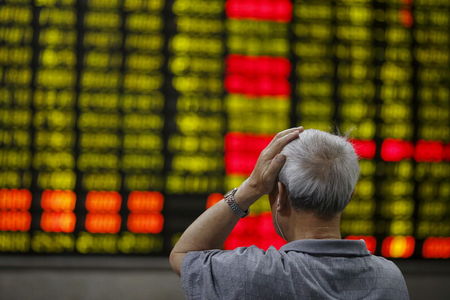
Asia stocks slip amid tech losses, Iran tensions; Nikkei leads losses
US stock futures slide after Netflix guidance disappoints, chips fall further Investing.com-- Most Asian stock markets fell on Friday, with Japan’s Nikkei leading regional losses as technology shares extended a global selloff and investors remained cautious over escalating U.S.-Iran tensions that continued to support oil prices. Regional markets took a weak lead-in from overnight losses on Wall Street, where losses in major tech and chipmaking stocks spurred deep losses. S&P 500 Futures fell 0.5% in Asian trade, pointing to sustained weakness in Wall Street.
Hawkish comments from Federal Reserve officials added to anxiety over rising interest rates. Nikkei drops 4% with tech shares leading losses Japan’s Nikkei 225 was the worst performer in Asia, sliding 4% on losses in heavyweight chip-related stocks, while the broader TOPIX declined 2.6. Investors continued to trim semiconductor holdings despite stronger-than-expected earnings and an upbeat outlook from TSMC (TW:2330) (TSMC), suggesting lofty expectations had already been priced into the sector.
Murata Mfg Co (TYO:6981) and Kioxia Holdings Corp (TYO:285A) were both major decliners on the Nikkei. TSMC slid 5% in Taiwan trade, even as the world’s biggest contract chipmaker flagged continued artificial intelligence-driven demand in the coming quarters. But a sharp increase in the chipmakers capital expenditure forecast for the year spooked markets already on edge over sky-high spending on AI.
Losses in tech spilled over into broader sectors. China’s Shanghai Composite slipped 1.6%, while the blue-chip Shanghai Shenzhen CSI 300 fell 2.5%. Hong Kong’s Hang Seng dipped 2%.
South Korean markets were closed for a public holiday after suffering steep losses earlier in the week amid a sharp selloff in semiconductor shares. Elsewhere, Australia’s ASX 200 and Singapore’s Straits Times index edged 0.5% lower each. Data released on Friday showed Singapore’s key non-oil exports grew less than expected in June after several months of stellar growth.
India’s Nifty 50 index rose 0.6% in early trade. Traders weigh escalating US-Iran tensions, oil surge Market sentiment remained fragile as the conflict between the United States and Iran intensified. The U.S. military said it carried out a sixth consecutive night of strikes on Iran on Thursday, stoking concerns over potential disruptions to oil supplies through the Strait of Hormuz.
Brent crude and U.S. West Texas Intermediate futures were both on track for weekly gains of more than 10%, their biggest weekly advances since April. Higher oil prices also fueled concerns that renewed energy inflation could complicate the outlook for central banks, although recent U.S. inflation data have reinforced expectations that the Federal Reserve will keep rates unchanged in the near term. Investors also continued rotating out of richly valued AI and semiconductor names into more defensive sectors after recent gains, even as analysts said the long-term outlook for artificial intelligence spending remained intact.
- Published
- Jul 16, 2026
- Updated
- Jul 16, 2026
- Source
- Investing Canada
- Category
- Business
- Read time
- 2 min
Key facts
Why this matters locally
This business story matters locally because it may affect readers, businesses, commuters, families, or public services in British Columbia.
Local impact
BC Post links this item to British Columbia coverage so readers can follow related city updates, weather, traffic, events, and category news in one place.
Timeline
Source and credit
BC Post may summarize, organize, and add local context for reader clarity. Original reporting remains with the listed publisher.
Related Articles
View all Business
AI Market Trends: Q2 2026 Review and Forecast
Business
AI Market Trends: Q2 2026 Review and Forecast
 Business
Starchuk seeking judicial review of Surrey arena land-swap
Business
Starchuk seeking judicial review of Surrey arena land-swap
 Business
B.C.'s Massey Tunnel replacement doubles in cost to estimated $8.5 billion
Business
B.C.'s Massey Tunnel replacement doubles in cost to estimated $8.5 billion
 Business
This is the design of Coquitlam's new aquatic and community centre on the Fraser River
Business
This is the design of Coquitlam's new aquatic and community centre on the Fraser River
More Local Coverage
Latest news Politics
Powerful pro-life ad featuring boxing legend to air during final World Cup matches
Politics
Powerful pro-life ad featuring boxing legend to air during final World Cup matches
 Local News
Cowichan sports shorts: rugby, hockey, biking
Local News
Cowichan sports shorts: rugby, hockey, biking