

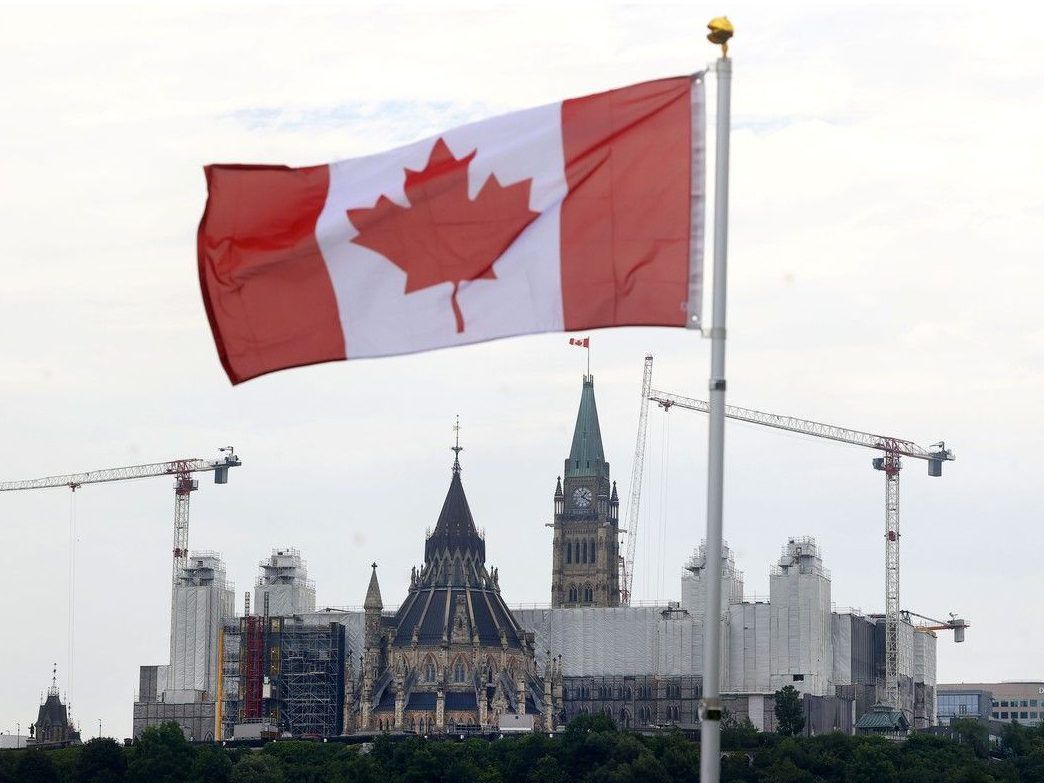
'Canadians are sending the message that they’ve had enough of paying more to receive less,' said the Montreal Economic Institute's Renaud Brossard
A new poll has revealed that 70 per cent of Canadians think their high tax bill reduces their standard of living, while the majority of respondents also feel they pay too much in taxes and government subsidies are not worth the cost. The poll , which was conducted by Ipsos for the Montreal Economic Institute (MEI), reveals that the proportion of respondents in Quebec who feel their tax burden reduces their standard of living is even higher, at 74 per cent, followed by West Canada (72 per cent), Atlantic Canada (68 per cent) and Ontario (66 per cent).
In addition, 63 per cent of all respondents feel they pay too much income tax (though this is down from a peak of 72 per cent in 2024) and 66 per cent believe that subsidies are not worth the cost of taxes. “Canadians are sending the message that they’ve had enough of paying more to receive less,” Renaud Brossard, Vice President of Communications at the MEI, said in a press release accompanying the poll. “As grocery and housing prices keep climbing higher and higher, taxpayers are fed up with seeing their governments spending so recklessly.”
When it came to spending, 52 per cent of Canadians think the federal government spends too much, versus just 5 per cent who say it doesn’t spend enough. No level of government received a majority of support from respondents when asked if they felt they got their money’s worth from taxes, but provincial governments received the worst ranking, with 56 per cent of respondents saying they do not get their money’s worth. On the federal government, 48 per cent of respondents felt they do get their money’s worth, slightly more than the 45 per cent who feel federal taxes are bad value for money.
This is an increase from 2025, when 45 per cent perceived federal taxes as good value for money. Meanwhile, Canadians are divided on government spending transparency, with dissatisfaction (48 per cent) slightly outweighing satisfaction (43 per cent). And of the sovereign wealth fund, which was announced in April, 58 per cent of respondents oppose borrowing the $25 billion set out to finance the fund’s creation.
“People understand that with a federal budget in deficit, each dollar put into this fund is a dollar more of debt,” Brossard said. “Canadians don’t want more subsidies and they don’t want more spending; what they want is a government that respects their ability to pay.” The MEI report notes that the federal government is projecting a deficit of $65.4 billion for the current year.
The poll comes after a recent Fraser Institute report revealed that the top 20 per cent of income-earning families in Canada pay nearly two-thirds (65.3 per cent) of the country’s personal income taxes and more than half (58.3 per cent) of total taxes. Meanwhile, the same report detailed that the bottom 20 per cent of income-earning families are estimated to pay 0.7 per cent of all federal and provincial personal income taxes and 1.7 per cent of total taxes in Canada, while earning 4.3 per cent of the total family income.
Jake Fuss, director of fiscal studies at the Fraser Institute, said in a news release: “Canadians should be aware that the country’s tax system is already progressive, and calls to raise taxes further on top earners can have unintended economic consequences.” The Ipsos poll was conducted among a sample of 1,005 Canadians aged 18 years and over, who were polled online between June 26 and July 1st, 2026. The results are accurate to within plus or minus 3.8 percentage points, 19 times out of 20.
Top 20% of Canadian earners pay more than half of all taxes, says study warning against increasing rates Canada's housing crisis is dragging life satisfaction down among young adults Our website is the place for the latest breaking news, exclusive scoops, longreads and provocative commentary. Please bookmark nationalpost.com and sign up for our daily newsletter, Posted, here .
- Published
- Jul 17, 2026
- Updated
- Jul 17, 2026
- Source
- National Post
- Category
- Canada
- Read time
- 3 min
Key facts
Why this matters locally
This canada story matters locally because it may affect readers, businesses, commuters, families, or public services in British Columbia.
Local impact
BC Post links this item to British Columbia coverage so readers can follow related city updates, weather, traffic, events, and category news in one place.
Timeline
Source and credit
BC Post may summarize, organize, and add local context for reader clarity. Original reporting remains with the listed publisher.
Related Articles
View all Canada
Vaughn Palmer: NDP was asked four years ago to rescue B.C.'s pulp mills. It didn't
Canada
Vaughn Palmer: NDP was asked four years ago to rescue B.C.'s pulp mills. It didn't
 Canada
Port of Vancouver expansion project referred to Canada’s Major Projects Office
Canada
Port of Vancouver expansion project referred to Canada’s Major Projects Office
 Canada
Vancouver working to avoid ‘the great sigh’ following FIFA World Cup excitement
Canada
Vancouver working to avoid ‘the great sigh’ following FIFA World Cup excitement
 Canada
‘Weather whiplash’ leaves Winnipeg businesses sore
Canada
‘Weather whiplash’ leaves Winnipeg businesses sore


